
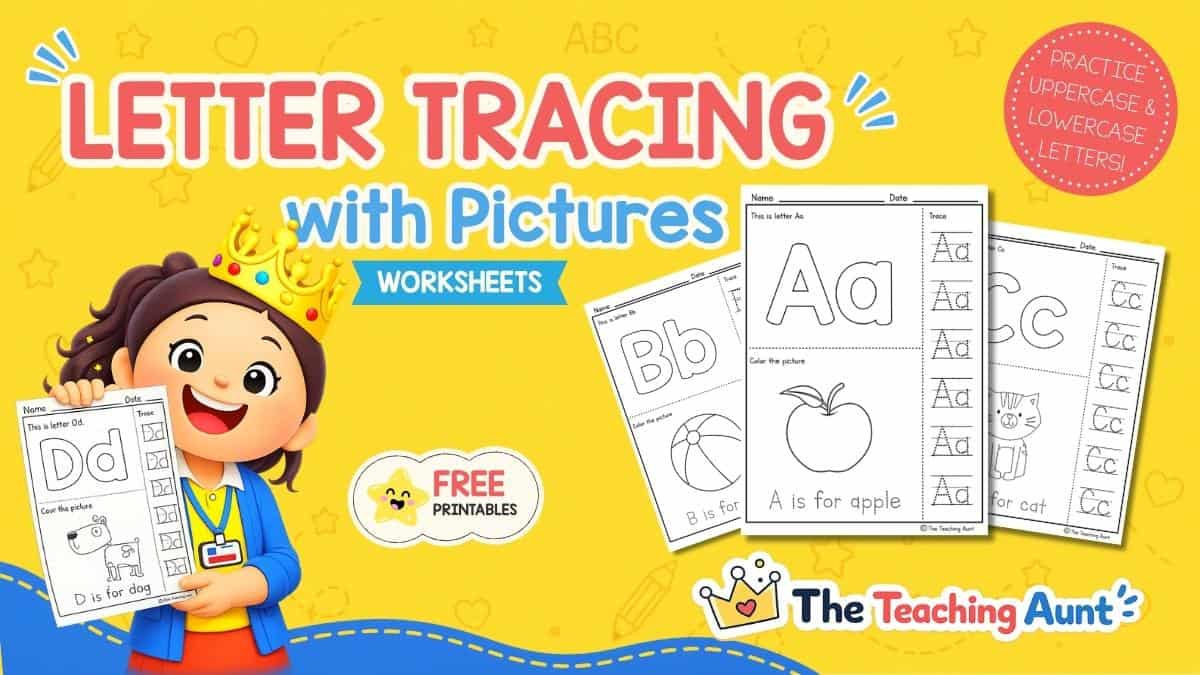
These free letter tracing worksheets with pictures help preschool and kindergarten children practice writing uppercase and lowercase letters while connecting each letter to a familiar word and picture.
A is for apple.
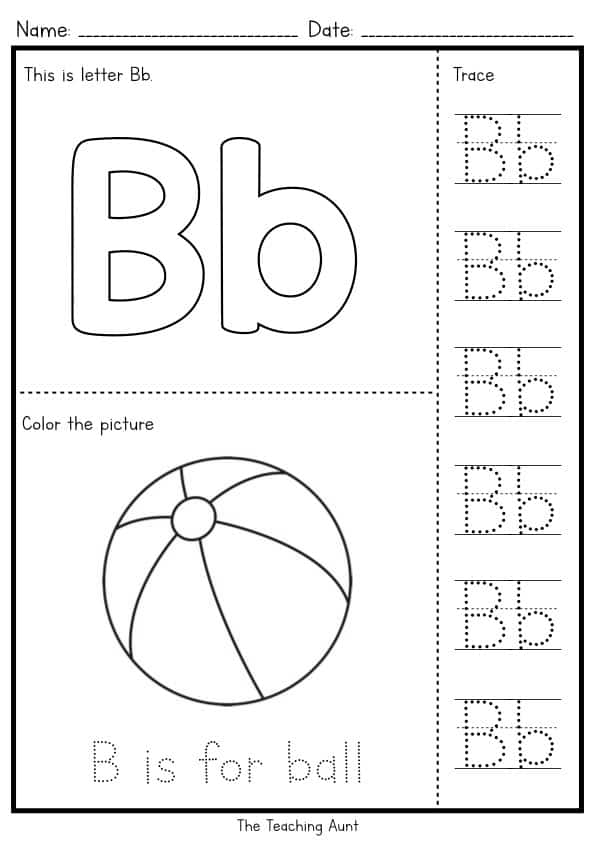
B is for ball.
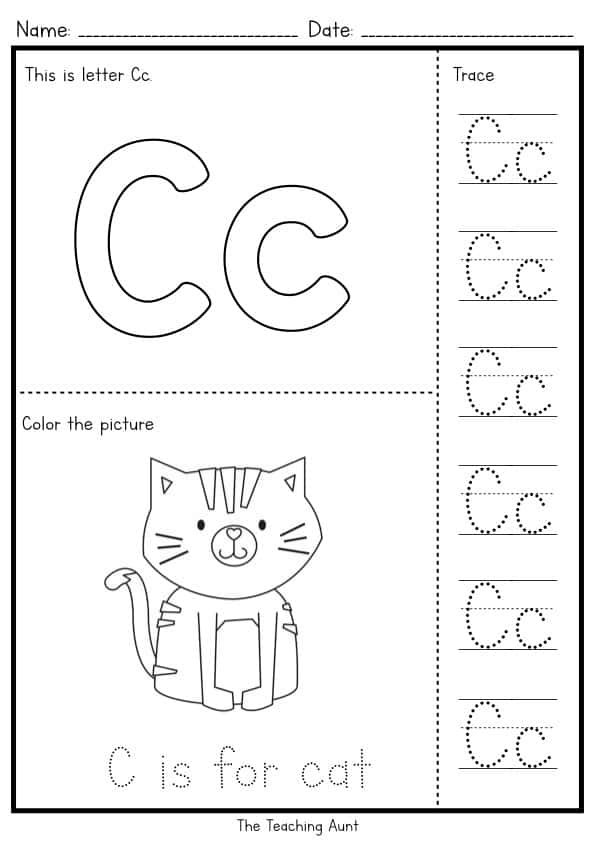
C is for cat.
Simple picture clues like these can help children remember letters, build vocabulary, and begin making connections between letters and sounds.
Each printable worksheet combines letter tracing and picture learning, making this set a fun addition to your preschool alphabet lessons.
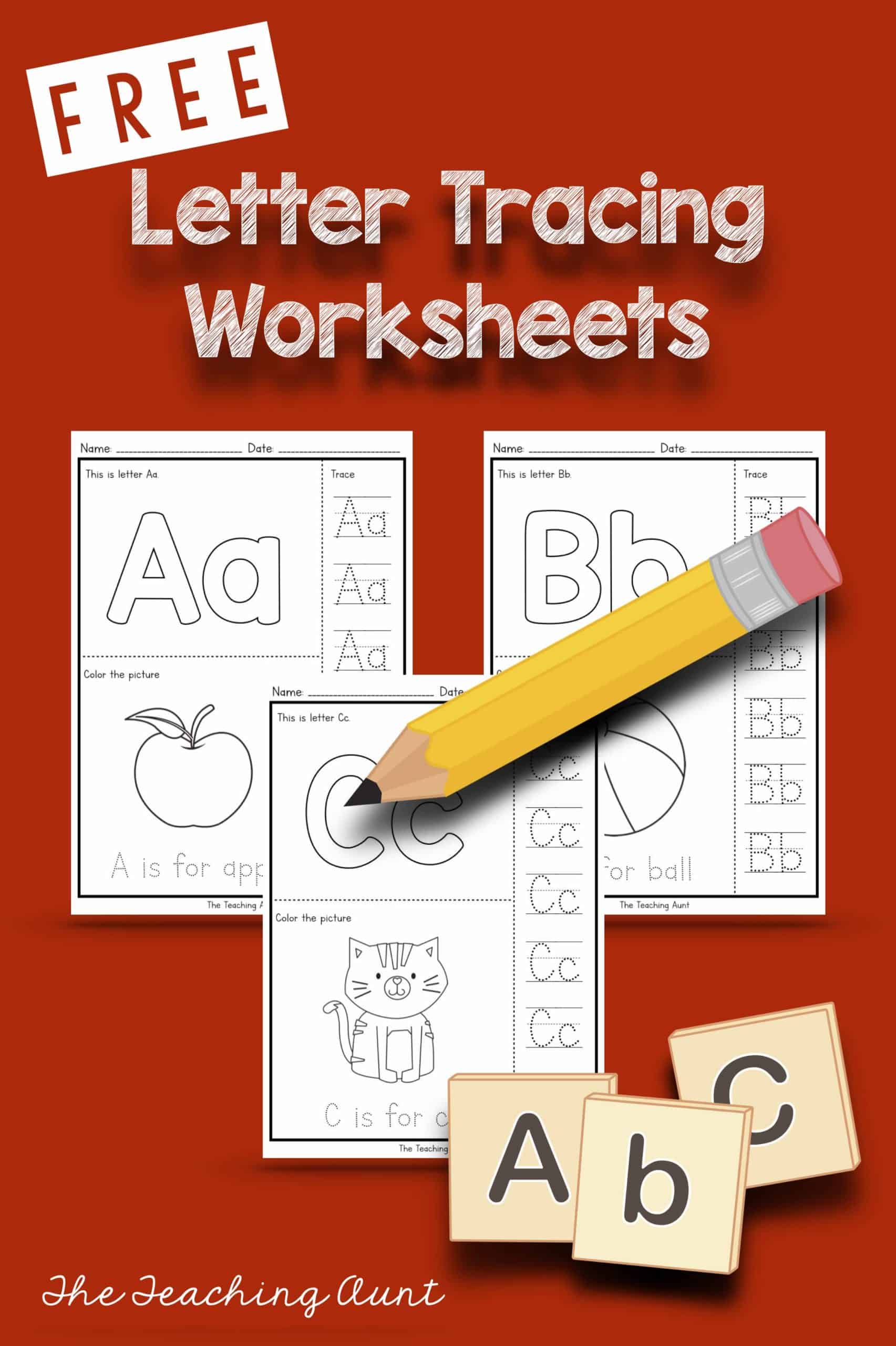
Free Letter Tracing Worksheets with Pictures A–Z
This printable collection includes letter tracing worksheets from A to Z, with a picture representing each letter of the alphabet.
Children can practice both forms of the target letter:
A a
B b
C c
all the way through:
Z z
Along with the letters, each worksheet includes a familiar picture that begins with the target letter.
This gives children several things to explore on one page:
- Uppercase letter recognition
- Lowercase letter recognition
- Letter tracing
- Letter formation
- Picture recognition
- Beginning sounds
- Vocabulary
- Fine motor skills
Instead of tracing letters in isolation, children can connect each letter to something they already know.
That makes alphabet practice much more meaningful!

Why Use Pictures When Teaching Letters?
Young children naturally respond to pictures.
If I show a preschooler the letter D, they may or may not remember its name immediately.
But show them a picture of a dog, and suddenly we have something familiar to talk about.
“Dog starts with D!”
Pictures give children a visual clue that can help them connect an abstract letter symbol to a real word.
For example:
A is for apple.
Children see the letter A, look at the apple, say the word apple, and begin hearing the /a/ sound at the beginning.
That simple interaction combines several early literacy skills at once.
Letter Tracing Meets Beginning Sounds
These worksheets aren’t only for handwriting practice.
You can also use the pictures to introduce beginning sounds.
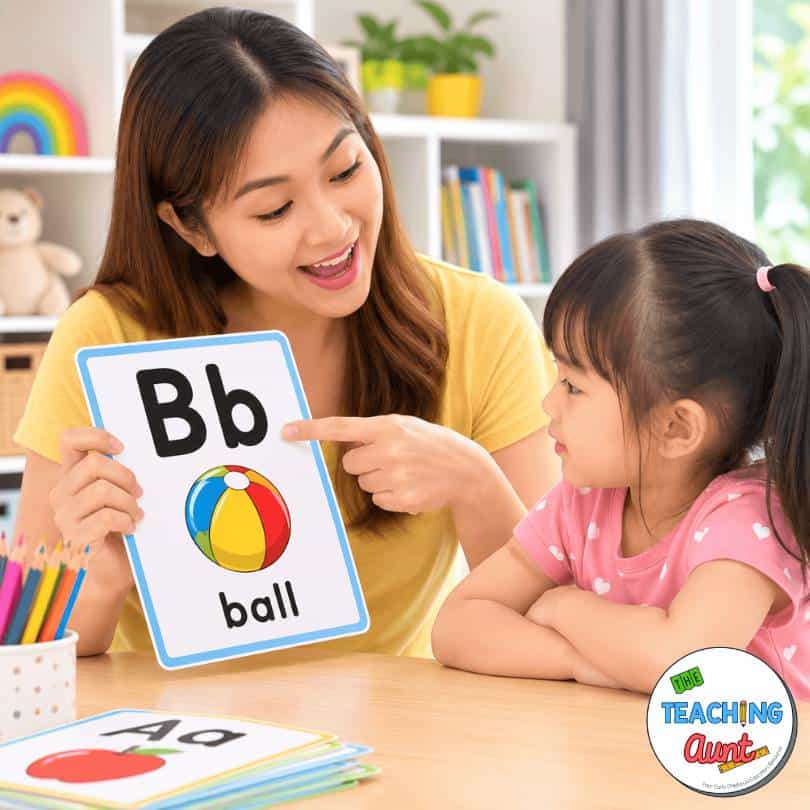
Before tracing a letter, point to the picture and ask:
“What is this?”
Let your child name it.
Then emphasize the beginning sound.
For example:
“Ball. /b/ /b/ ball!”
Then point to the letter:
“B says /b/.”
Finally, trace the uppercase and lowercase forms together.
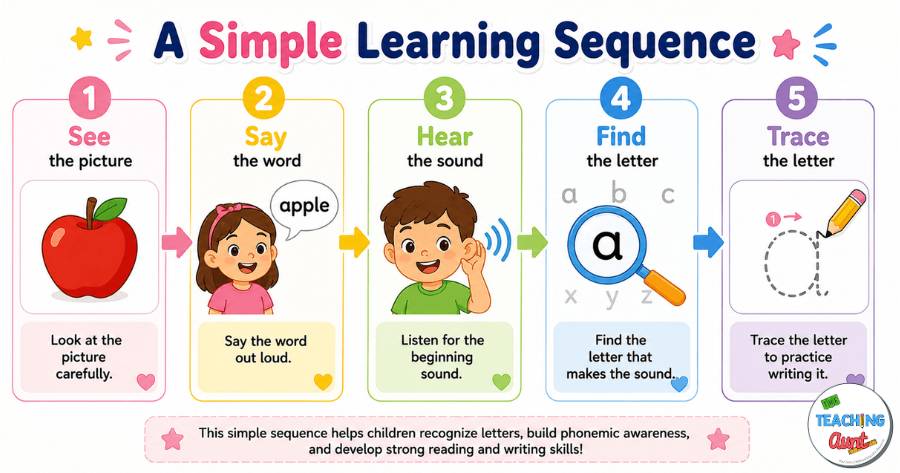
This creates a simple learning sequence:
See the picture → Say the word → Hear the sound → Find the letter → Trace the letter
It turns an ordinary handwriting worksheet into a mini phonics activity.
Practice Uppercase and Lowercase Letters Together
One feature I especially like about this type of worksheet is that children can see uppercase and lowercase letters together.
For example:
A a
B b
C c
Young children need to learn that uppercase and lowercase letters may look different but represent the same letter and sound.
Some pairs are easy to recognize because they look similar:
C c
O o
S s
Others look very different:
A a
G g
R r
Seeing the two forms together gives children repeated exposure to these important letter pairs.
You can point to each one and say:
“Big A. Little a. They are both the letter A!”
How to Use These Letter Tracing Worksheets
You don’t need to complete the entire alphabet in order.
Choose one letter and focus on it.
Start by looking at the picture.
Ask your child:
“What do you see?”
“What sound does the word start with?”
“What letter makes that sound?”
Then point to the uppercase and lowercase letters.
Say the letter name together.
Next, demonstrate how to form the letter before asking your child to trace.
Finally, let your child complete the tracing practice independently.
This keeps the activity focused on understanding the letter—not simply following dotted lines.
Try Finger Tracing First
Before giving children a pencil, let them trace the letters with their fingers.
Point to the starting position.
Then slowly move your finger along the letter while saying simple formation directions.
For example:
“Start at the top.”
“Go down.”
“Go across.”
“Curve around.”
After finger tracing, children can use a crayon, marker, or pencil.
This extra step can be especially helpful for preschoolers who are still developing pencil control.
Talk About the Picture
Don’t rush past the picture!
It gives you an easy opportunity to build language and vocabulary.
Ask simple questions such as:
“What is this?”
“What color is it?”
“Have you seen one before?”
“Where can we find it?”
“What sound does it start with?”
For example, if the worksheet has a picture of a fish:
“What is this?”
“A fish!”
“What sound do you hear at the beginning of fish?”
“/f/!”
“What letter makes the /f/ sound?”
“F!”
Now the child isn’t just tracing F f.
They’re connecting picture + word + sound + letter.
Turn It into an Alphabet Sound Game
You can also use the worksheets for a quick beginning-sound game.
Before telling children the target letter, cover it with your hand or a small piece of paper.
Show only the picture.
Then ask:
“What letter do you think we’re practicing today?”
Give children time to say the picture word and listen for the first sound.
For example:
Picture: sun
“Sun starts with /s/. What letter makes /s/?”
S!
Reveal the letter and see if they were right.
It’s a simple way to add a little guessing game to handwriting practice.
Find More Words That Start with the Letter
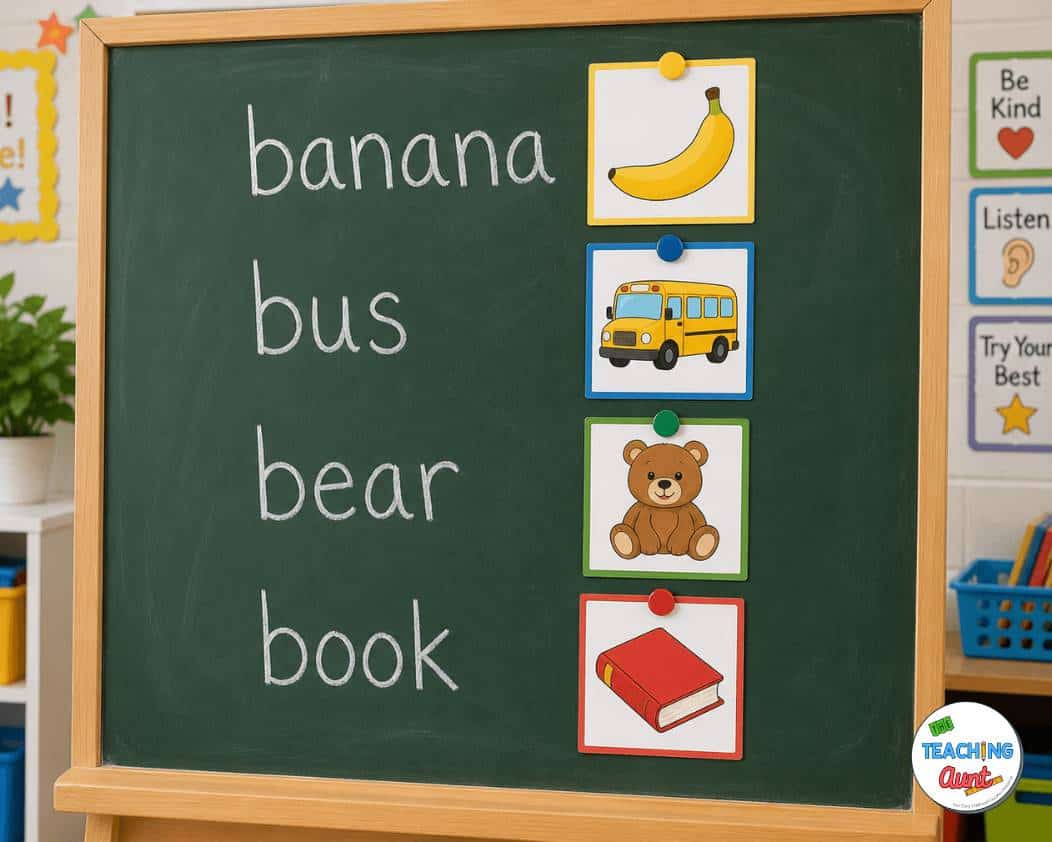
After identifying the worksheet picture, challenge children to think of more words that begin with the same letter.
If you are working on B, for example:
B is for ball.
What else starts with B?
Bear!
Banana!
Book!
Bus!
You can write the words down while your child watches.
Older preschoolers or kindergarten students can try drawing one of the additional words beside the worksheet.
This extends the activity from handwriting into vocabulary and phonological awareness.
Practice the Letter with Hands-On Activities
After completing the tracing worksheet, continue practicing the same letter away from the table.
Children can make letters using:
- Playdough
- Sand
- Flour
- Paint
- Sidewalk chalk
- Yarn
- Craft sticks
- Building blocks
- Magnetic letters
You can also ask children to make a giant version of the letter in the air.
Say:
“Let’s make a BIG letter B!”
Use your whole arm to form the letter.
Then:
“Now make a tiny B with your finger!”
Changing the size and materials keeps letter practice interesting.
Make the Worksheets Reusable
If your child enjoys tracing the same letters more than once, laminate the worksheets or place them inside reusable plastic sleeves.
Then use dry-erase markers.
Children can:
Trace.
Erase.
Trace again!
This is especially useful for preschool classrooms and literacy centers where several children may use the same printable.
You can also collect all 26 worksheets in a binder to create a reusable A–Z letter tracing book with pictures.
Use the Worksheets for an Alphabet-of-the-Week Activity
These worksheets can easily fit into a letter-of-the-week routine.
For example:
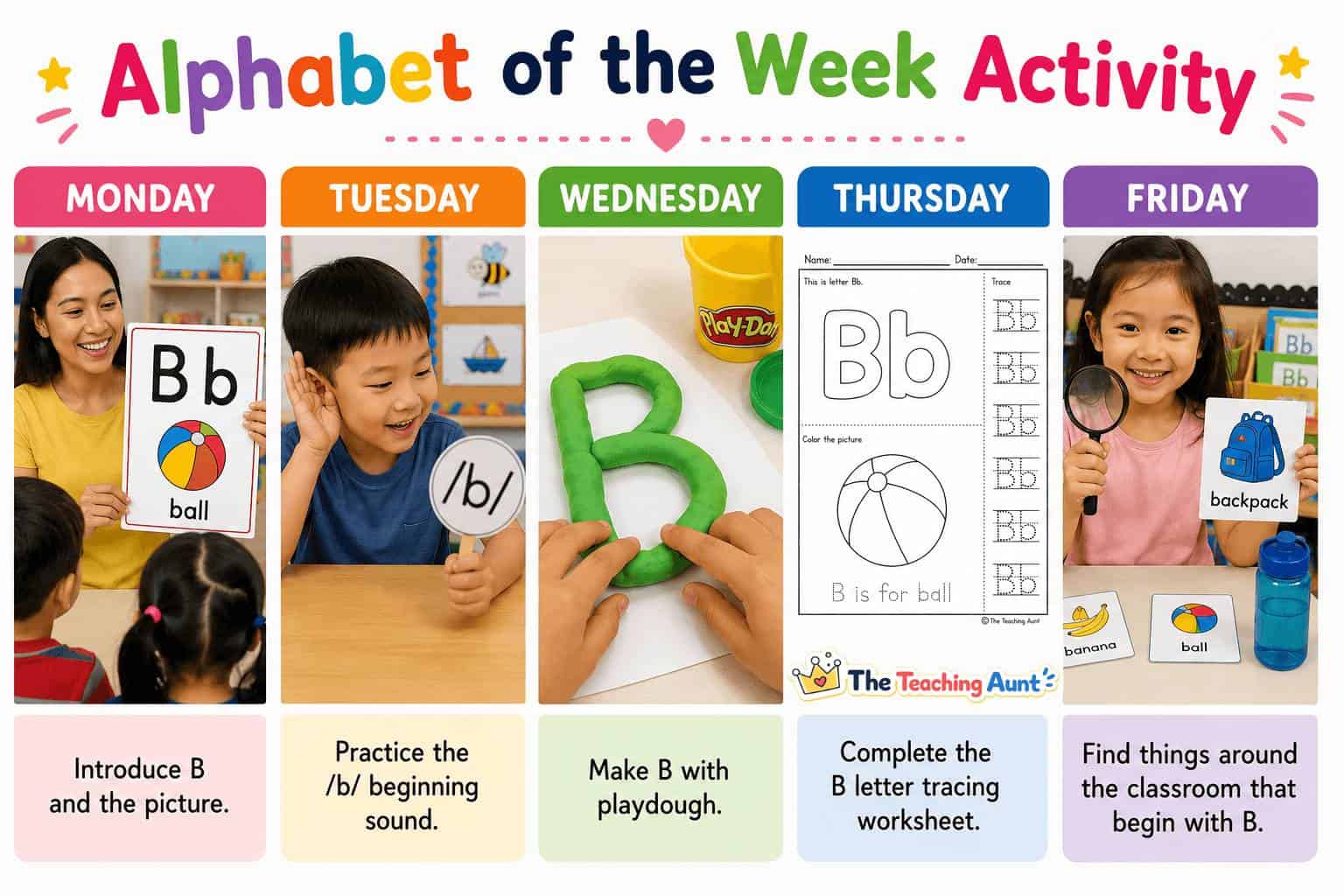
Letter B Week
Monday: Introduce B and the picture.
Tuesday: Practice the /b/ beginning sound.
Wednesday: Make B with playdough.
Thursday: Complete the B letter tracing worksheet.
Friday: Find things around the classroom that begin with B.
This gives children several opportunities to interact with the same letter without completing worksheet after worksheet.
You can repeat the routine as you move through the alphabet.
Use the Pictures for Vocabulary Practice
The picture on each worksheet can also support children who are learning English.
Point to the picture and clearly say its name.
Ask children to repeat the word.
Then emphasize the first sound.
For example:
“Cat.”
“Say cat.”
“Cat starts with /k/.”
“C says /k/.”
This combines vocabulary, pronunciation, phonics, and handwriting in one short activity.
For young English language learners, visual clues can make new words much easier to understand and remember.
How Often Should Children Practice Letter Tracing?
Young children don’t need long handwriting sessions.
Around 5 to 10 minutes of focused practice can be plenty for many preschoolers.
You might work on one worksheet and then move on to a hands-on alphabet activity.
For example:
5 minutes: Look at the picture and talk about the beginning sound.
5 minutes: Trace the uppercase and lowercase letter.
Then later in the day, look for the same letter in a book or make it with playdough.
Short activities spread throughout the day can provide lots of meaningful repetition without making handwriting feel tiring.
Looking for More Alphabet Tracing Practice?
These worksheets are especially useful when you want children to connect letters with pictures and beginning sounds.
If you’re looking for a broader collection of handwriting activities for both uppercase and lowercase letters, visit my complete Alphabet Tracing Worksheets A–Z page.
→ Explore the Free Alphabet Tracing Worksheets A–Z
You’ll find more printable resources for children who are learning how to recognize, trace, and write the alphabet.
If your child needs focused practice with only one letter form, you can also use my dedicated uppercase and lowercase tracing sets.
→ Uppercase Letter Tracing Worksheets A–Z
→ Lowercase Letter Tracing Worksheets a–z
Choose the printable set that best matches the skill your child is currently practicing.
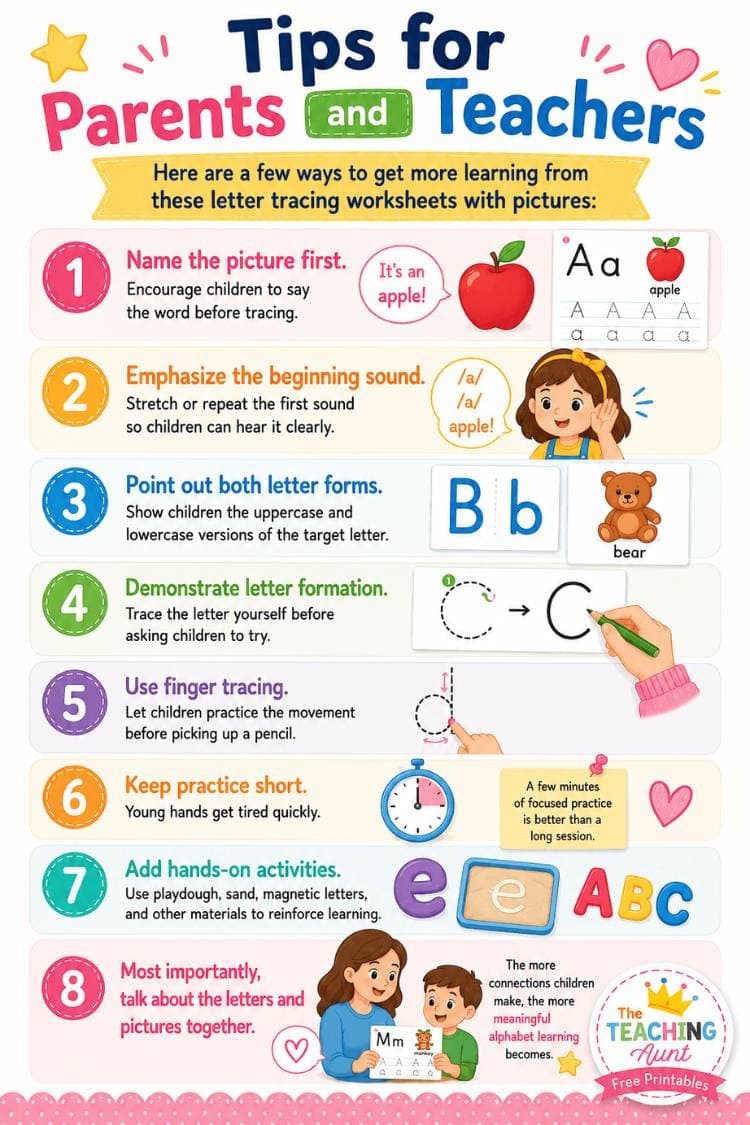
Tips for Parents and Teachers
Here are a few ways to get more learning from these letter tracing worksheets with pictures:
Name the picture first.
Encourage children to say the word before tracing.
Emphasize the beginning sound.
Stretch or repeat the first sound so children can hear it clearly.
Point out both letter forms.
Show children the uppercase and lowercase versions of the target letter.
Demonstrate letter formation.
Trace the letter yourself before asking children to try.
Use finger tracing.
Let children practice the movement before picking up a pencil.
Keep practice short.
Young hands get tired quickly.
Add hands-on activities.
Use playdough, sand, magnetic letters, and other materials to reinforce learning.
Most importantly, talk about the letters and pictures together.
The more connections children make, the more meaningful alphabet learning becomes.
Frequently Asked Questions
What are letter tracing worksheets with pictures?
Letter tracing worksheets with pictures combine guided handwriting practice with a picture representing the target letter. Children can practice letter formation while connecting the letter to a familiar word and beginning sound.
Why are pictures helpful when learning letters?
Pictures provide young children with visual clues. Connecting a letter to a familiar object can help reinforce letter recognition, vocabulary, and beginning-sound awareness.
Are these worksheets for preschool or kindergarten?
These worksheets can be used with preschool and kindergarten children who are learning to recognize and write uppercase and lowercase letters. The appropriate level depends on each child’s handwriting and alphabet knowledge.
Should children say the letter sound while tracing?
You can encourage children to say the letter name and practice its most common sound. Pairing the letter with the worksheet picture can make this easier—for example, “B, /b/, ball.”
Do children need to complete the worksheets from A to Z?
No. You can work alphabetically, follow your classroom curriculum, or begin with meaningful letters such as those in the child’s name.
How can I make these tracing worksheets reusable?
Laminate the pages or place them inside reusable plastic sleeves. Children can trace the letters with dry-erase markers, wipe the worksheets clean, and practice again.
Download the Free Letter Tracing Worksheets with Pictures A–Z
Ready to practice letters and sounds?

Download and print these free letter tracing worksheets with pictures A–Z for your preschooler, kindergarten student, homeschool lessons, or classroom literacy activities.
Remember to make the most of each picture.
See the picture.
Say the word.
Hear the beginning sound.
Find the letter.
Trace the letter.
By connecting pictures, sounds, and handwriting, children can build several early literacy skills at the same time.
For even more handwriting activities, visit my complete Alphabet Tracing Worksheets A–Z collection.
Or just visit my Free Printable Page for more!

P.S.
Do you want PREMIUM FREEBIES? Please subscribe to my blog. I promise it will be worth it!
Oh! And please like and follow us on Facebook and Pinterest! <3
Happy learning,

Last Updated: 23rd July 2026



22 Responses
you are the best, as a teacher is very simple and easier. Thank you for making everyones life easier. bless you !!!!
Happy to serve! 😊 I’m glad you liked our letters tracing worksheets. And thank you for the comment. It’s really motivating. Happy learning!
These letter tracing worksheets look fun and really simple for learning. I will use them with my Nephew.
Happy to serve! I’m glad you liked our letters tracing worksheets. 😊 HAppy learning, Uncle Claudy!
Tremendous resources, Thank you!
Happy to serve! 😊
Awesome!!!
Thank you! 😁
Thank you so much! These are just fantastic!
Happy to serve! I’m glad you liked our letters tracing worksheets free printable. Happy learning! 🙂
would love to get some
Hello, Sarah! Thank you for leaving me a message. For your free printable, just click on the pink download button that you will find towards the end of this post. And the free letter tracing worksheets will be downloaded automatically. Happy learning! 🙂
Love these! Thanks so much Teacher Nessy!
Happy to serve! 🙂
Thank you so much! I have a curious 4 year that loves to learn and she loves them!
That is awesome. I’m glad to hear your child loves our materials.Thank you for reaching out. 🙂 Happy learning!
This is amazing!! You are a life saver.
Hey, it’s a very good source of learning. I hope to get more updates from you.
Can you send me more free printables for preschoolers please
Hi! Please feel free to look around my website to check out all the other free printables. Happy learning! 🙂
Great teaching resources for my students and kids as well. Thank you for sharing. ❤️
I appreciate your feedback. Thank you very much. Happy learning! 🙂