
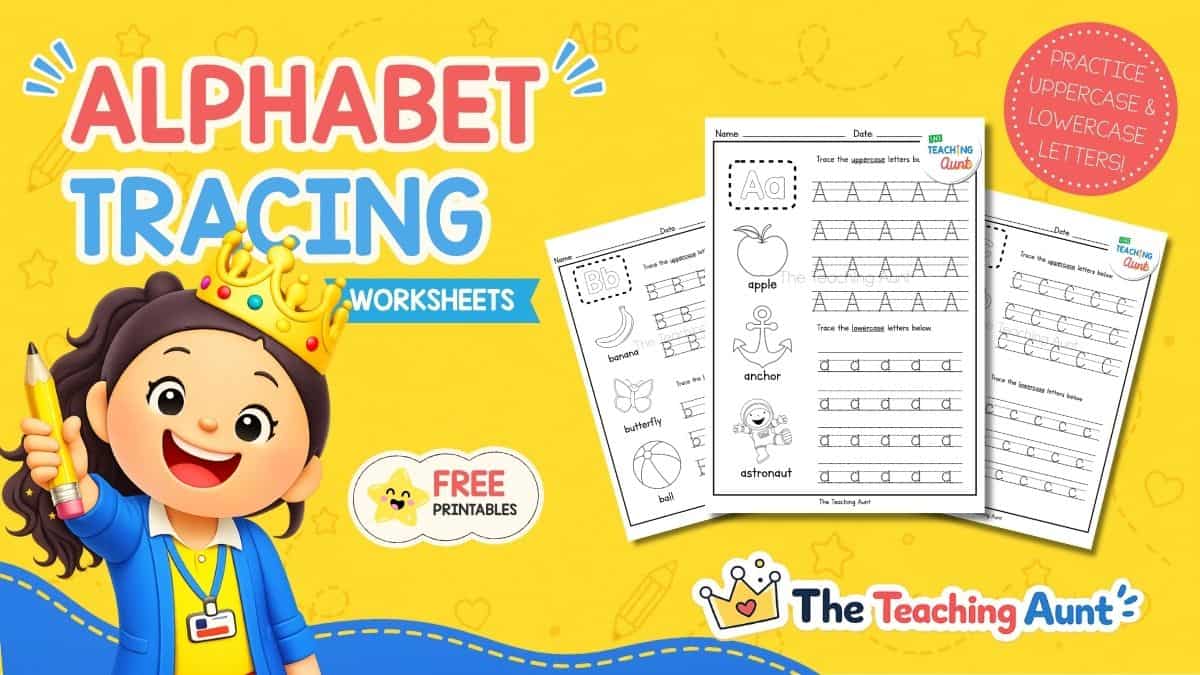
If your child or students are beginning to write their ABCs, these free alphabet tracing worksheets are a simple and fun way to practice letter formation. This printable collection is designed for preschool and kindergarten children who are learning how to trace and write uppercase and lowercase letters.
Learning to write the alphabet is a big milestone for young children—and lots of tracing practice can make the process much easier!
As a preschool teacher, I’ve found that children do best when handwriting practice is introduced little by little. We don’t need to rush through all 26 letters! A few minutes of tracing each day can help children become more comfortable holding a pencil, following lines, and forming letters correctly.
On this page, you’ll find free printable alphabet tracing worksheets A–Z, plus links to more focused uppercase and lowercase letter tracing activities.

Free Printable Alphabet Tracing Worksheets
These alphabet tracing worksheets give children guided practice as they learn to write the letters of the alphabet.
The worksheets are especially helpful for:
- Preschool children learning their ABCs
- Kindergarten students practicing handwriting
- Homeschool alphabet lessons
- Morning work
- Literacy centers
- Independent practice
- Homework and review
You can also place the worksheets inside reusable plastic sleeves and let children trace the letters with dry-erase markers. This is one of my favorite ways to get more practice from a single printable!
Why Is Alphabet Tracing Important?
Before children can confidently write letters on their own, they need opportunities to practice the movements involved in letter formation.
Tracing provides that extra support.
Instead of looking at a letter and figuring out where their pencil should go, children have a path they can follow. With repeated practice, they begin to remember the lines, curves, and strokes needed to form each letter.
Alphabet tracing can help develop:
- Letter recognition
- Letter formation
- Pencil control
- Hand-eye coordination
- Fine motor skills
- Writing confidence
These early handwriting skills also support children as they begin writing their names, words, and eventually simple sentences.
Start with Pre-Writing Skills
If your preschooler is having difficulty tracing letters, that’s okay. They may simply need more practice with basic lines and shapes first.
Before introducing alphabet writing, children can practice tracing:
- Horizontal lines
- Vertical lines
- Diagonal lines
- Curved lines
- Zigzag lines
- Circles and simple shapes
These basic strokes appear again and again when children write letters.
For example, the uppercase letter A uses diagonal and horizontal lines, while letters such as C and O require curved movements.
Building these skills first can make alphabet tracing feel much more manageable.
How to Teach Children to Trace Letters
When introducing a new letter, I recommend demonstrating it first rather than immediately handing your child a worksheet.
Point to the starting position and slowly show how the letter is formed.
You can say simple directions such as:
“Start at the top.”
“Go straight down.”
“Go around.”
“Go across.”
Then let your child trace the letter with their finger before using a pencil.
This gives them a chance to practice the movement without worrying about pencil grip at the same time.
After finger tracing, children can trace with a crayon, marker, or pencil.
Remember: handwriting is a skill, and skills improve with practice.
Uppercase Letter Tracing Worksheets
Many children begin with uppercase letters because their forms are often easier to recognize and reproduce.
Capital letters are also everywhere in a young child’s world. They see them at the beginning of their names, on classroom displays, in alphabet books, and on signs.
If you want to focus specifically on capital letter formation, use my Uppercase Letter Tracing Worksheets A–Z.
This dedicated printable set gives children guided practice tracing each uppercase letter from A to Z.
→ Get the Free Uppercase Letter Tracing Worksheets A–Z
You can work through the alphabet in order or introduce the letters that are most meaningful to your child first—such as the letters in their name.


Lowercase Letter Tracing Worksheets
Once children are comfortable recognizing and forming capital letters, you can give them more focused practice with lowercase letters.
Lowercase letters are especially important for beginning readers and writers because most of the letters children see in books and sentences are lowercase.
Some lowercase letters can also be trickier to form, so plenty of guided practice helps.
For focused practice, download my Lowercase Letter Tracing Worksheets a–z.
→ Get the Free Lowercase Letter Tracing Worksheets a–z
Encourage children to work slowly and pay attention to where each letter begins.


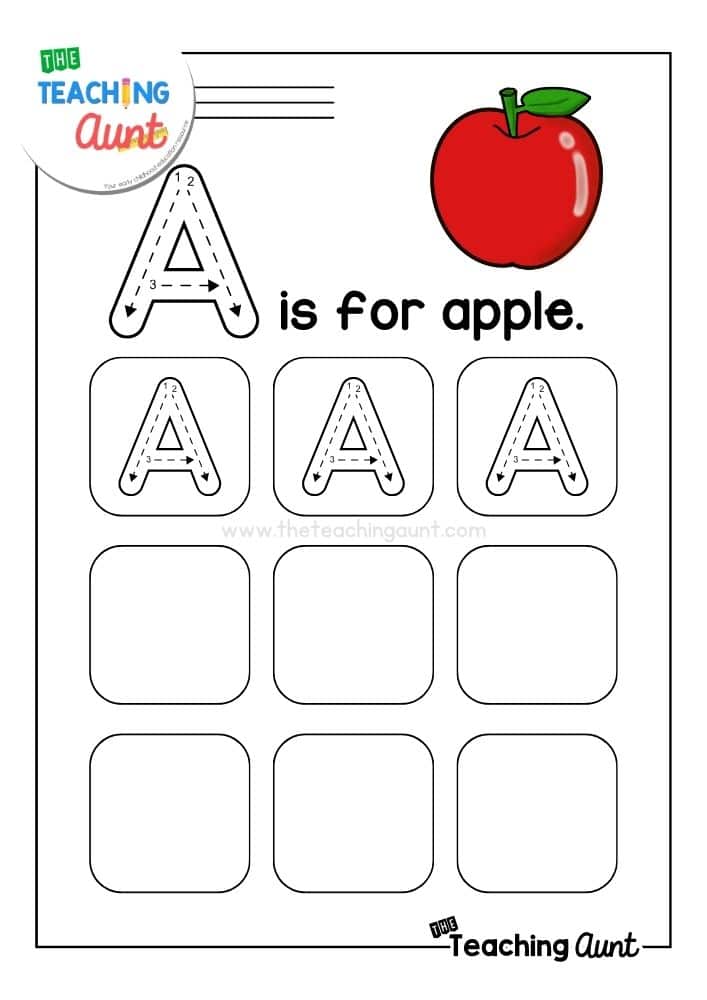
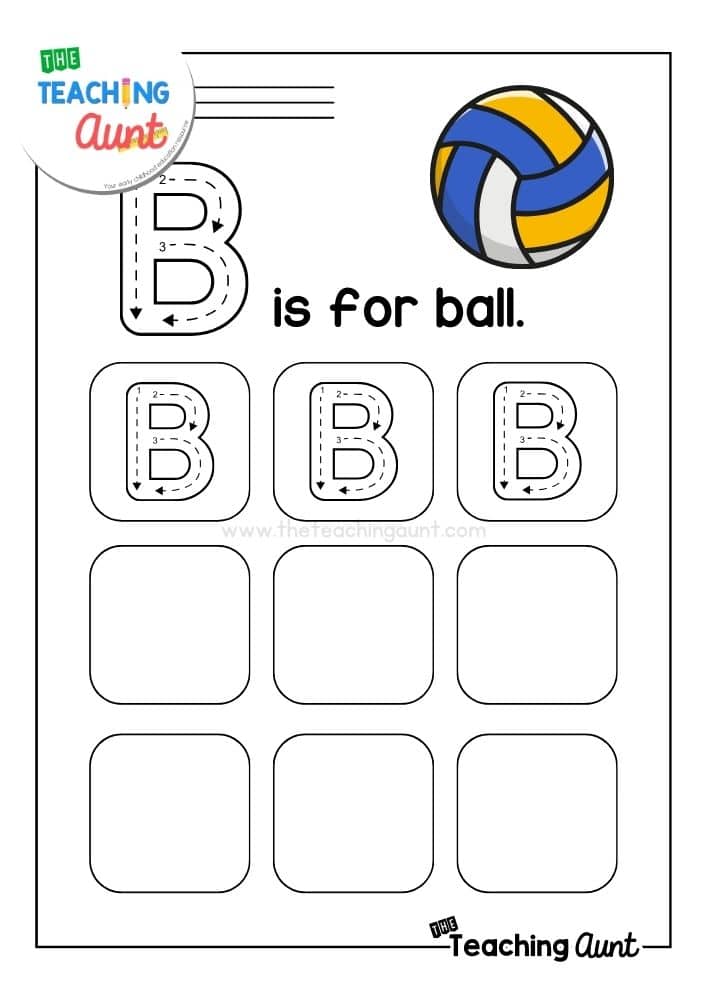
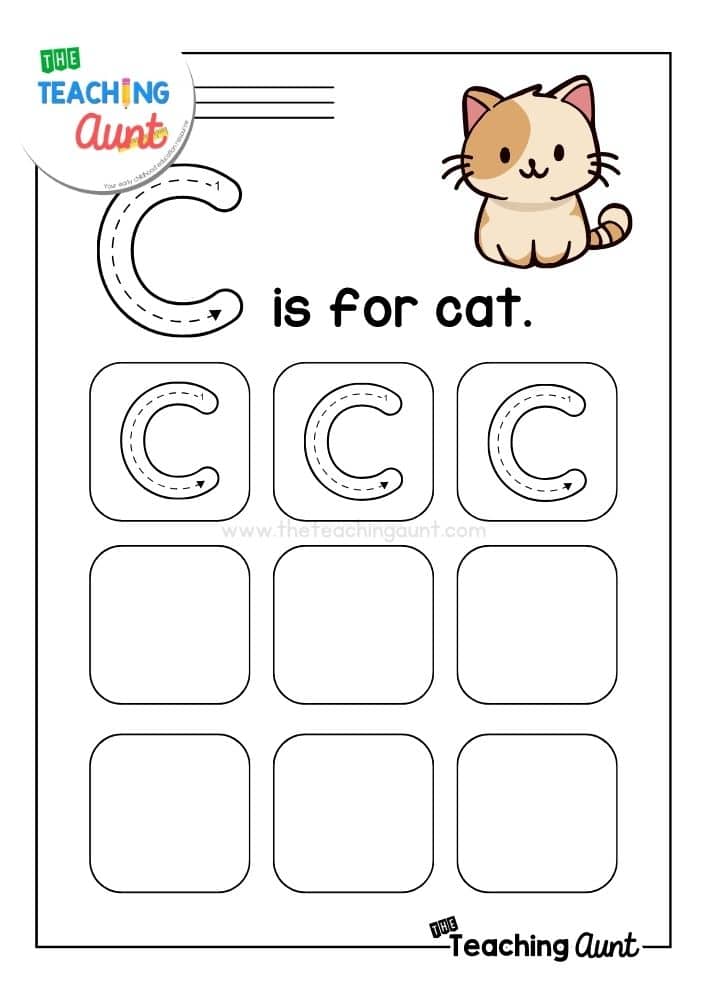
Letter Tracing Worksheets with Pictures
Pictures can make handwriting practice more meaningful for preschoolers.
Connecting a letter to a familiar picture helps reinforce both letter recognition and beginning sounds.
For example:
A is for apple.
B is for ball.
C is for cat.

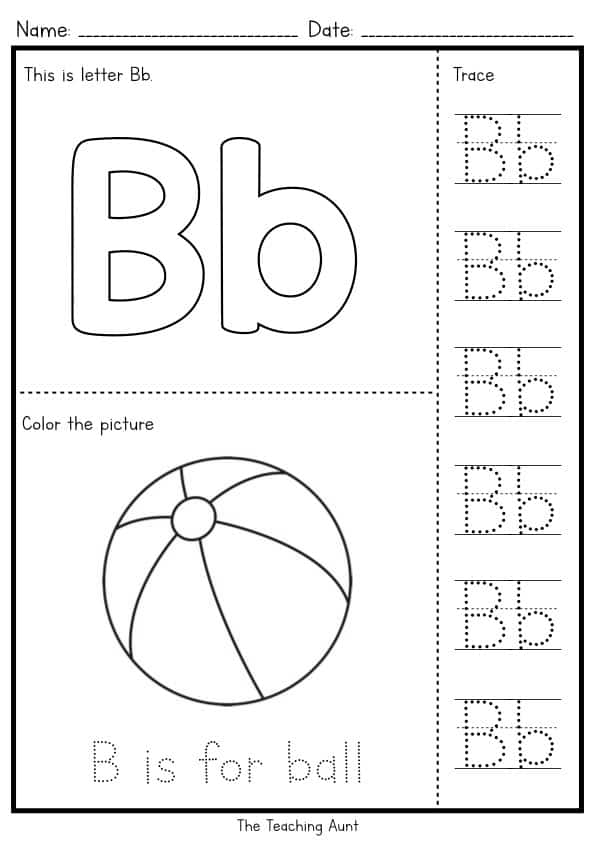
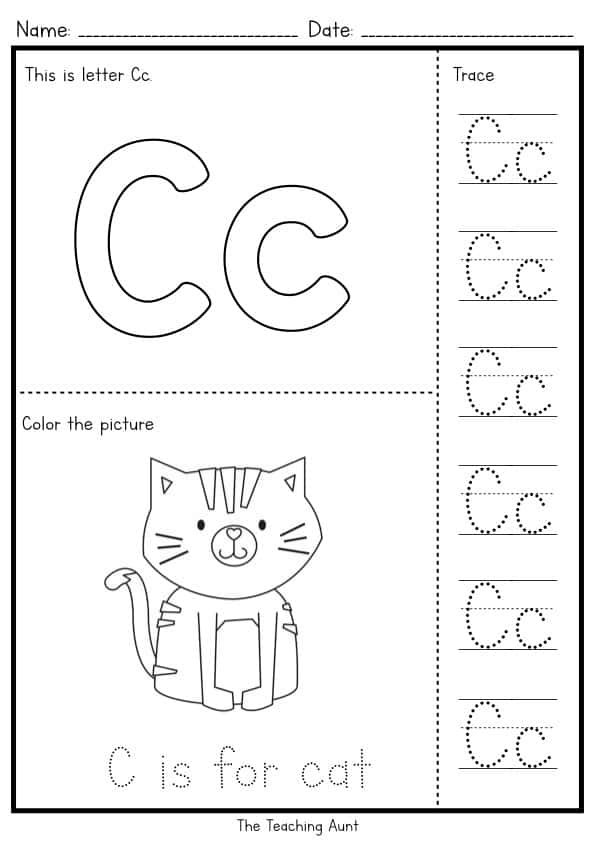
If your child enjoys learning with pictures, try my Letter Tracing Worksheets with Pictures A–Z.
Each worksheet combines letter practice with a picture representing the target letter.
→ Get the Free Letter Tracing Worksheets with Pictures
This set is a great choice if you want to combine handwriting practice with early phonics and vocabulary learning.
Uppercase or Lowercase Letters: Which Should You Teach First?
There isn’t one approach that works for every child.
Some teachers introduce uppercase letters first because their shapes can be easier for beginners to form. Others introduce uppercase and lowercase letters together so children learn that A and a represent the same letter.
Personally, I think it’s helpful for children to recognize both forms early while adjusting the amount of writing practice to their ability.
If your child is just beginning, you might focus more heavily on uppercase tracing while continuing to point out the matching lowercase letter.
As their pencil control improves, gradually introduce more lowercase writing practice.


Try Alphabet Tracing Without a Pencil
Alphabet practice doesn’t always have to happen on paper.
Young children learn through movement and sensory experiences, so give them opportunities to form letters in different ways.
Try:
- Writing letters in sand
- Finger tracing letters in flour
- Making letters with playdough
- Writing with sidewalk chalk
- Painting letters with a paintbrush
- Forming letters with craft sticks
- Air-writing giant letters
- Tracing letters with a finger
These activities are especially useful for children who aren’t ready to sit for long handwriting sessions.
After practicing through play, you can return to the alphabet tracing worksheets for more focused writing practice.

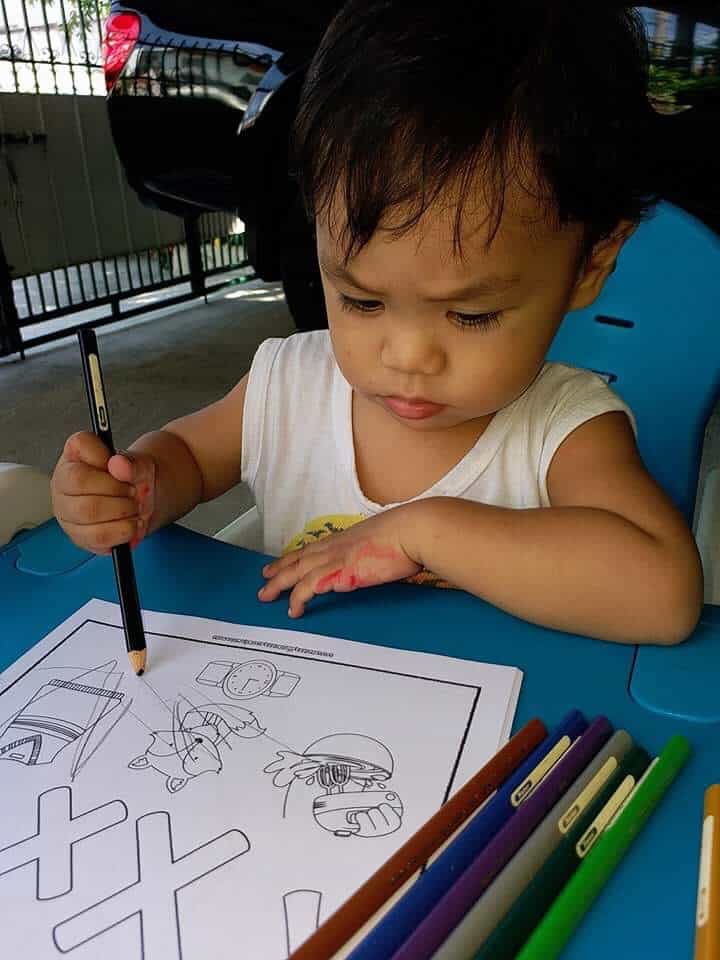

How Often Should Preschoolers Practice Letter Tracing?
Short and consistent practice is usually better than a long handwriting session.
For preschoolers, even 5 to 10 minutes of tracing practice can be enough.
You might introduce one letter and then practice it several times throughout the week using different activities.
For example:
Day 1: Introduce the letter and its sound.
Day 2: Finger trace and form the letter with playdough.
Day 3: Complete a letter tracing worksheet.
Day 4: Find the letter in books or around the classroom.
Day 5: Try writing the letter independently.
This keeps alphabet learning varied while still giving children repeated exposure.
Make Alphabet Tracing Fun
Not every child loves worksheets—and that’s perfectly fine.
You can make tracing activities more exciting by changing the writing tool.
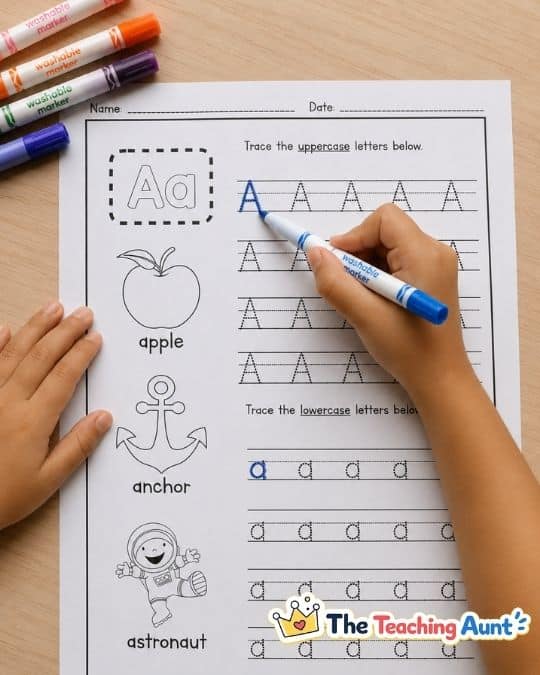
Instead of always using a pencil, try:
- Crayons
- Colored pencils
- Washable markers
- Dry-erase markers
- Rainbow writing
For rainbow writing, children trace the same letter several times using different colors.
It’s simple, but preschoolers usually love seeing their letters turn colorful!
You can also let children choose which letter they want to practice. Giving them a little choice can make handwriting time feel less like work.
Tips for Parents and Teachers
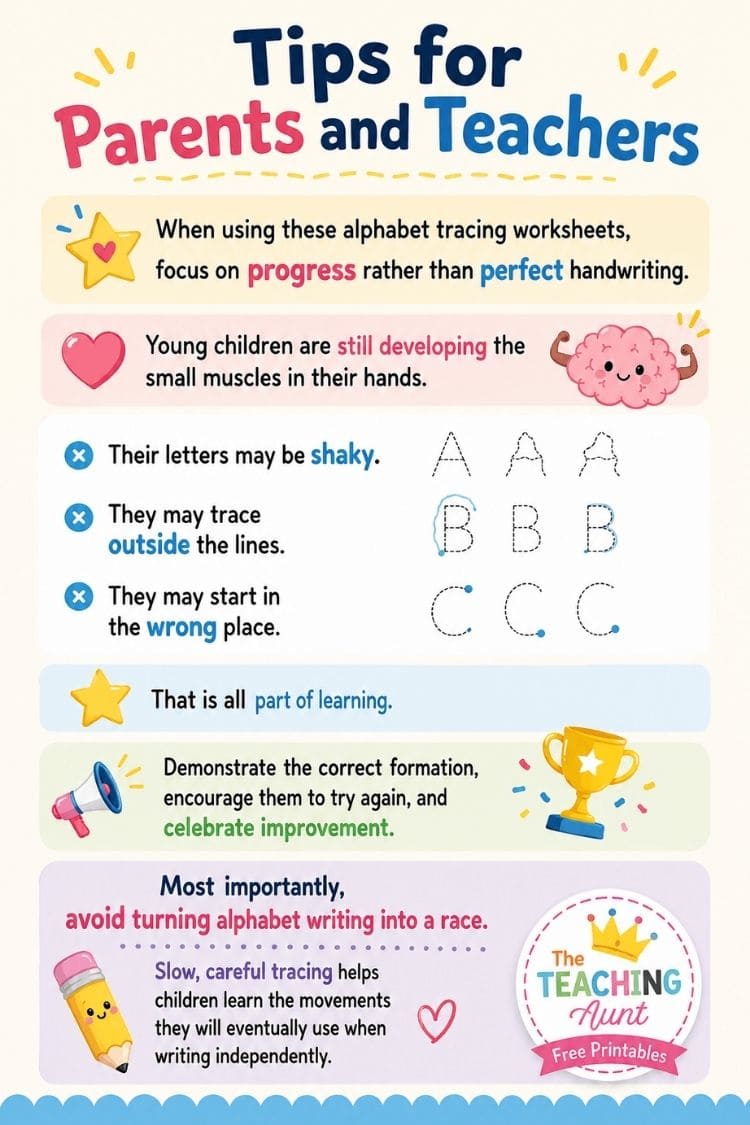
When using these alphabet tracing worksheets, focus on progress rather than perfect handwriting.
Young children are still developing the small muscles in their hands.
Their letters may be shaky.
They may trace outside the lines.
They may start in the wrong place.
That is all part of learning.
Demonstrate the correct formation, encourage them to try again, and celebrate improvement.
Most importantly, avoid turning alphabet writing into a race.
Slow, careful tracing helps children learn the movements they will eventually use when writing independently.
More Alphabet Activities for Preschool and Kindergarten
Alphabet tracing works best when it is combined with other early literacy activities.
Along with handwriting practice, children can work on:
- Alphabet recognition
- Uppercase and lowercase matching
- Beginning sounds
- Letter-sound correspondence
- Alphabet vocabulary
- Name writing
- Fine motor activities
This helps children understand that letters aren’t simply shapes to copy—they represent sounds that we use to read and write words.
Frequently Asked Questions
What are alphabet tracing worksheets?
Alphabet tracing worksheets are handwriting practice pages that provide guided letters for children to trace. They help beginners learn the strokes and movements needed to form uppercase and lowercase letters.
What age should children start tracing letters?
Many children begin tracing letters during the preschool years, but readiness varies. Before focusing heavily on alphabet writing, children should have opportunities to develop pencil control through drawing, coloring, tracing lines, and other fine motor activities.
Should preschoolers trace uppercase or lowercase letters first?
Many beginners find uppercase letters easier to form, but children should gradually learn to recognize and write both uppercase and lowercase letters. You can begin with uppercase writing practice while introducing the matching lowercase letters alongside them.
How can I help my child learn letter formation?
Demonstrate how to form each letter, emphasize where to start, and let your child finger trace before using a pencil. Short, regular practice combined with hands-on alphabet activities can make learning easier.
Can I reuse these alphabet tracing worksheets?
Yes! Place printed worksheets inside reusable plastic sleeves or laminate them. Children can then practice with dry-erase markers, wipe the pages clean, and use them again.
Download Your Free Alphabet Tracing Worksheets
Ready to practice the ABCs?
Download and print the free alphabet tracing worksheets A–Z below and use them at home, in your preschool classroom, or as part of your homeschool lessons.


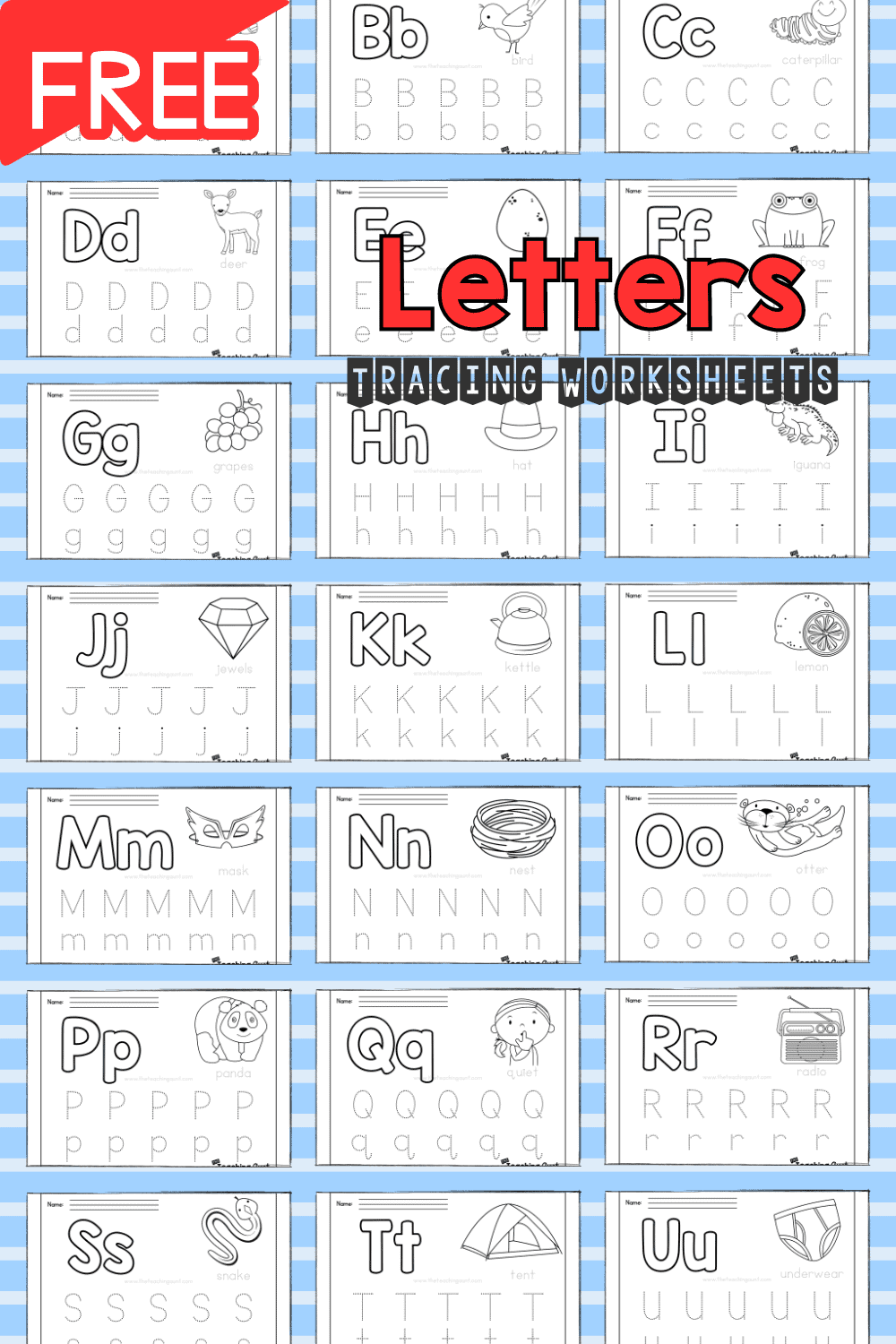
You can begin with just a few letters at a time and gradually work your way through the alphabet.
And if your child needs more focused practice, don’t forget to explore:
→ Uppercase Letter Tracing Worksheets A–Z
→ Lowercase Letter Tracing Worksheets a–z
→ Letter Tracing Worksheets with Pictures A–Z
I hope these alphabet worksheets make learning to write a little easier—and a lot more fun!
Or just visit my Free Printable Page for more!

P.S.
Do you want PREMIUM FREEBIES? Please subscribe to my blog. I promise it will be worth it!
Oh! And please like and follow us on Facebook and Pinterest! <3
Happy learning,

Last Updated: 23rd July 2026



53 Responses
Thank you very much for the awesome flash cards for free. It meant a lot to me.
Happy to serve! 🥰 I’m glad you liked our alphabet tracing worksheets. Your comment also meant a lot. Very motivating. 😊 Happy learning!
These page are awesome! Just what I was looking for, thanks so much 🙂
Happy to serve. 🙂 Have a wonderful day.
A BIG THANK YOU TEACHER NESSY!!! more power and more blessings to you!!! :* this is Teacher Del from Singapore 🙂
Happy to serve! And thank you so much for the message. Happy learning! ☺️
Hello Teacher Nessy!
THANKS A LOT for sharing this awesome printable. It’s so simple that my 4 YO is able to focus with what only needs to be done.
Just a little request please. Kindly adjust the sample image for ”T” and ”V” cuz what’s there is a sun and an umbrella which are from the previous letters.
Thanks again!!!
These are useful materials , keep it up .. so happy I found your blog/page
You are so sweet. Thank you for the feedback! 🙂
These worksheets are perfect for my kindergarten class. Your website has made my teaching life easier! Thank you The Teaching Aunt! 🙂
Aww… That is just so sweet. I’m really happy to be of service. And thank you for leaving me a message. I really appreciate it. ❤️
These worksheets are perfect for my preschool students. They are crazy about coloring so it helps that these wroksheets come with big pictures. Thank you so much for sharing your worksheets! 🙂
Thank you! My students also love coloring and that’s the exact reason why I put big pictured on these worksheets. 😊 Happy learning!
Oh I remember this thing, I used to do this, and eventually learn how to write an (almost) perfect letters like it was printed by computer. Adults can do this too for hand exercise.
I agree. Sometimes a little. it of practice with simple traci g such as this one can really help.
This is so useful! Printable alphabets to let my kids to have fun learning, writing and understand of it!
Thank you! I sure hope your kids enjoy these printables. 😁
That’s be so useful for young kids in kindergarten! knowing the alphabet headed of primary school!
Thank you. That is my goal. To help children learn in a fun and simple way.
Thank you so much!I’ve been looking for this for my boy. Gonna start Kindy next year!
Awwww… Kindergarten. I hope your boy enjoys school. 😁
What an amazing post! These are some neat printable. Thanks for sharing! 🙂
Thank you, Lavanda!
Such a great resource! Can’t wait to share with a friend who is homeschooling her kids!
That would be awesome! Thank you for sharing!
I love this post so much. It reminded me of the time my girls were little. Thanks for the printables.
Thank you, Wanda. 😁
These are awesome. Thank you so much. My little one will love these.
Thanks! I hope your little enjoys tracing and writing. 😁
The printable are so cute.. thanks for sharing out.. it’s great for the kiddos..
Thank you. I sure hope they enjoy the printables.
Such cute printables. I am sure that your child is enjoying them. I don’t have kids yet, but I will definitely try something like this to improve their motor skills.
Thanks! Yup. My nephew enjoys scribbling and doodling on the pages. 😁
I love all the things that you post for the education and enrichment of little ones. I don’t have kids, but I kind of want to print out the printable and do some coloring of my own. 🙂
Thank you, Laurie. I actually that. I print my own printables and answer them myself. hahaha. I want to know if it’s fun to work on. Like a test drive. 🤣
These printables are too cute, and super useful! I love using these to help teach my kids at home so they are more prepared for school.
Thank you! I love coming up with cute materials. 😊 And it makes me happy when other people think so too.
I used this kind of templates when I worked in the first grade of primary school a few years go. It’s real fun for kids!
I also used worksheets lime these before. So I decided to come up with my own. 😁
These will be great for my daughter to have when her baby is ready to learn. The baby is only 10 days old so it might be a while.
Oh. A long way to go then. 😁 I hope the baby gets to practice on these printables in the future.
Nice learning aid for preschool kids…learning made simple.
There are many aids available now to simplify learning process.
Regards
True. Most of the time, the simple materials are the ones that have more impact. 😁
These are great! My daughter is in first grade and actually writes in cursive, but these would be great for my pre k guys!
I hope your kids wnjoy the printables. 😁
These are such great printables for kids. I can see how they’d have fun with this and learn at the same time.
Thank you. I always try to put together useful and fun together. 😊
Wow!These look so beautiful. Reminds me of what my mom used to bring my brother when he was little since he loved drawing, coloring and playing around with alphabets.
Thank you! Materials like these are evergreen. No matter what generation, it’s still useful. 😁
Thank you so much for these free printable. I bet you are a great teacher. Keep it up Please.
I am so glad that found your blog, will be visiting you quite often.
BTW, I like your picture as well.
Thank you. I hope you find more useful materials in my blog. 😊
I love these!
Thank you, Patricia! 😊