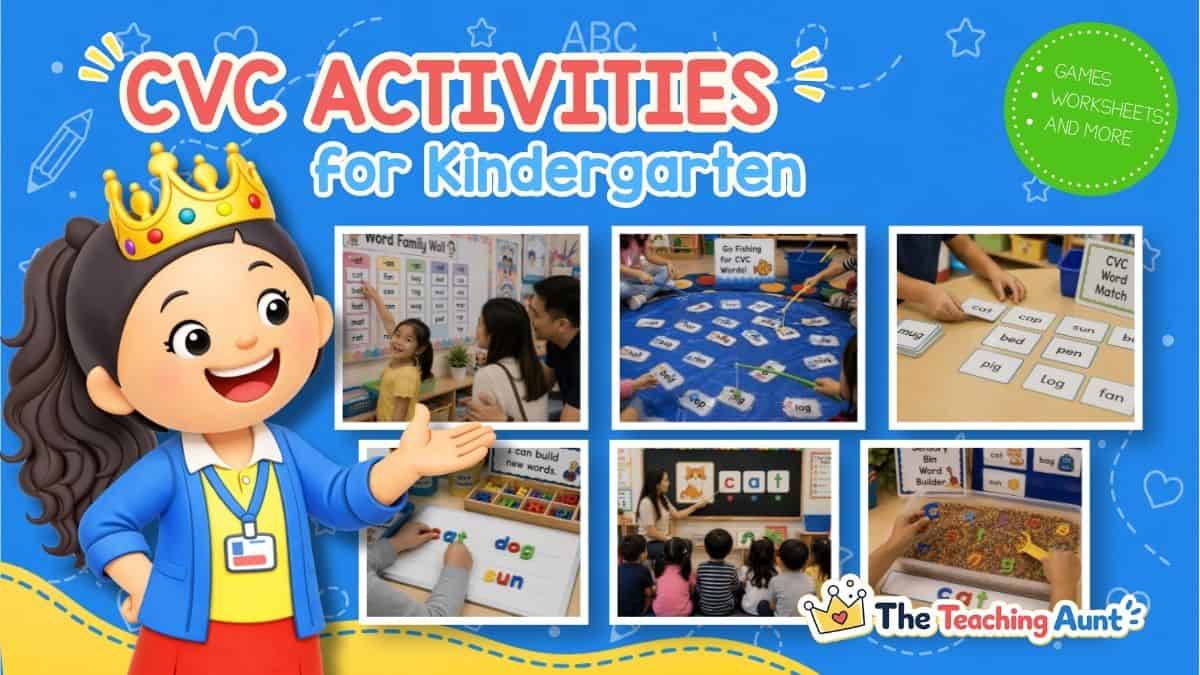
Learning to read should be one of the happiest adventures in a child’s life. Discover classroom-tested CVC activities, free printable worksheets, games, and teaching ideas that have helped young learners build confident reading skills for the past 20 years.
One of My Favorite Moments as a Preschool Teacher
One of my favorite moments as a preschool teacher happens over and over again.
A child carefully looks at a simple three-letter word.
They whisper each sound.
“C… a… t…”
Then suddenly…
“Cat!”
Their eyes grow wide, a huge smile appears on their face, and they excitedly look around the room as if they’ve just discovered a secret.
That tiny moment lasts only a few seconds, but for me, it never gets old.
This year marks my 20th year of teaching preschool and kindergarten, and after two decades in the classroom, I’ve learned that children don’t fall in love with reading because they complete dozens of worksheets.
They fall in love with reading because someone made learning feel exciting.
Sometimes that excitement came from magnetic letters.
Sometimes it came from pretending to catch words with a fishing rod.
Sometimes it came from celebrating a tiny victory after reading just one new word correctly.
Those joyful moments are exactly why I created this collection of free CVC activities.
Whether you’re a teacher planning literacy centers, a homeschool parent, or simply helping your child learn to read at home, I hope these classroom-tested ideas make learning fun while building strong reading skills.
Jump to a Section
What Are CVC Words?
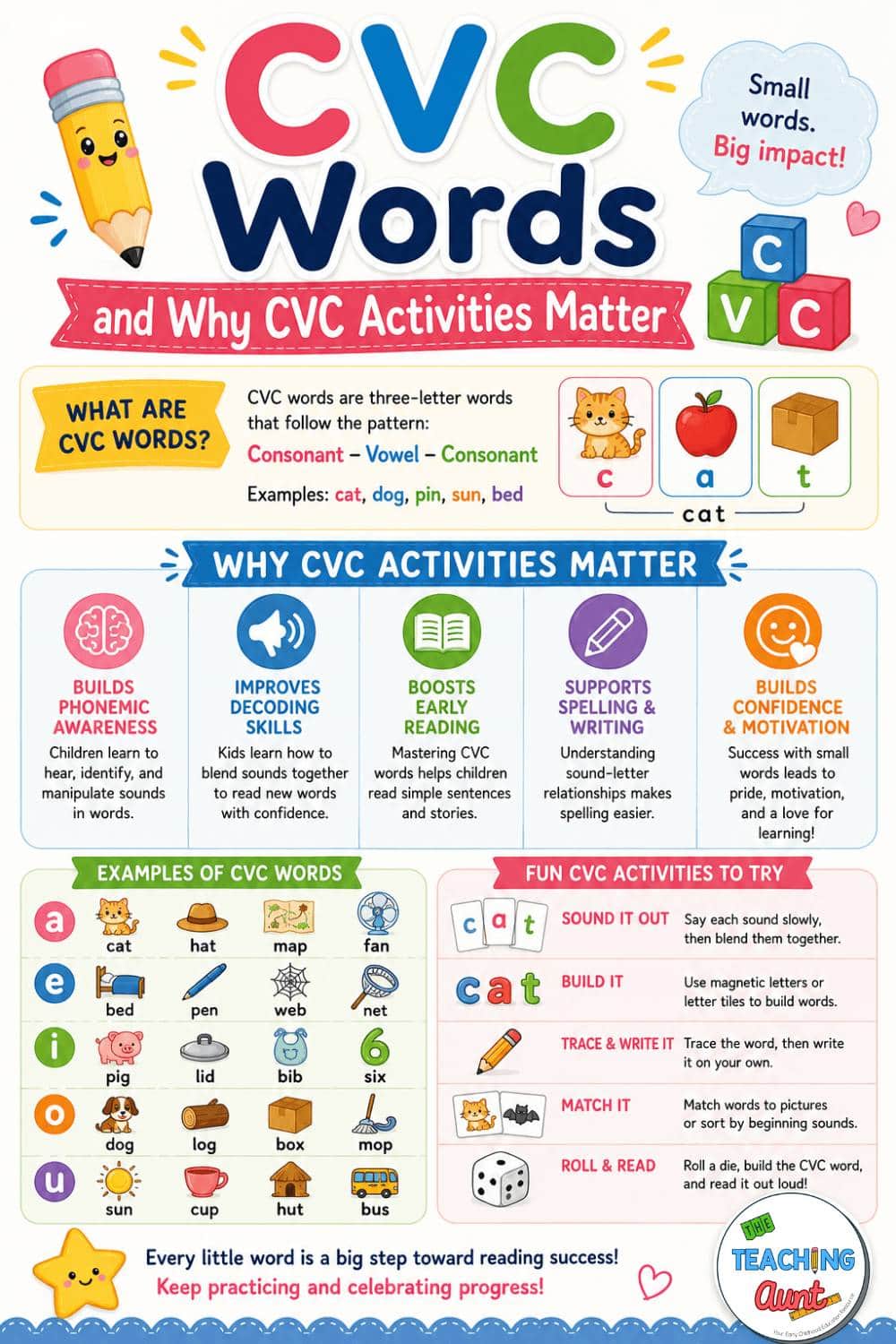
CVC stands for Consonant-Vowel-Consonant.
These are simple three-letter words made up of one consonant, one short vowel, and another consonant.
Some common examples include:
- cat
- dog
- pig
- sun
- pen
- hat
- bug
- log
Because each letter represents one sound, CVC words are often the very first words beginning readers learn to decode.
Instead of memorizing words, children practice blending individual sounds together.
For example:
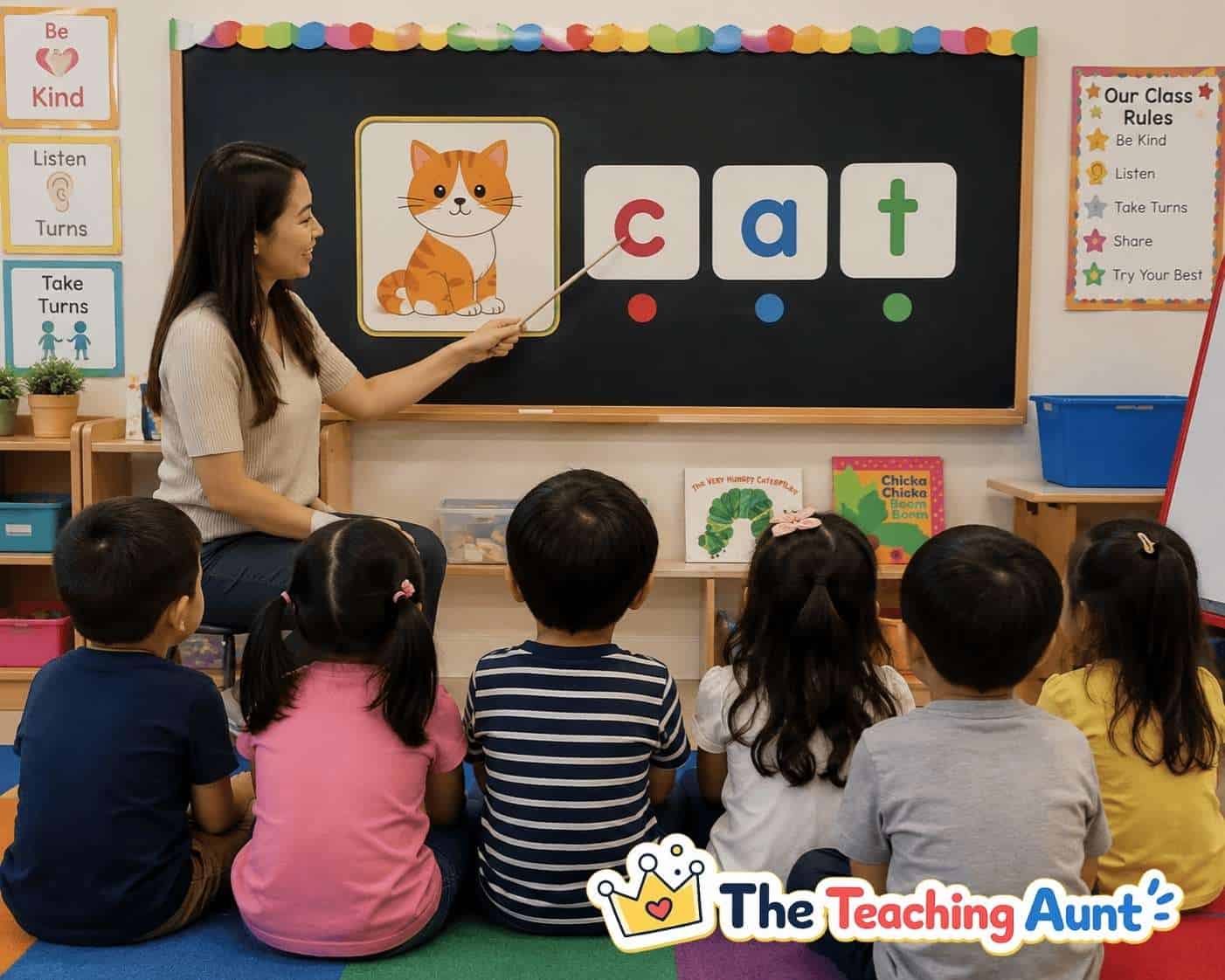
/c/ … /a/ … /t/
becomes
cat
Once children understand this process, reading becomes much less mysterious.
Instead of guessing, they begin decoding independently.
That confidence becomes the foundation for everything they read next.
Why CVC Activities Matter
Teaching CVC words isn’t simply about reading three-letter words.
These activities help children develop skills they’ll use throughout their reading journey.
CVC activities help children:
- strengthen phonemic awareness
- recognize letter sounds
- blend sounds into words
- improve spelling
- build reading confidence
- prepare for word families and simple sentences
- develop reading fluency
More importantly, they teach children that reading can be enjoyable.
And that’s a lesson that lasts far beyond kindergarten.
Twenty Years in My Preschool Classroom
Twenty years have taught me something I wish every parent and beginning teacher knew.
Every child learns differently.
Some children begin blending sounds almost immediately.
Others need more encouragement, more repetition, and a little extra time.
Neither child is behind.
They’re simply learning in their own way.
Over the years, I’ve discovered that my most successful phonics lessons weren’t always the ones with the fanciest materials.
They were the lessons where children laughed…
played…
built…
explored…
and forgot they were actually practicing reading.
That’s why you’ll notice that many of my favorite CVC activities involve movement, games, and hands-on learning.
Children remember what they enjoy.
My Favorite Ways to Teach CVC Words
After twenty years in the classroom, these are the activities I return to again and again.
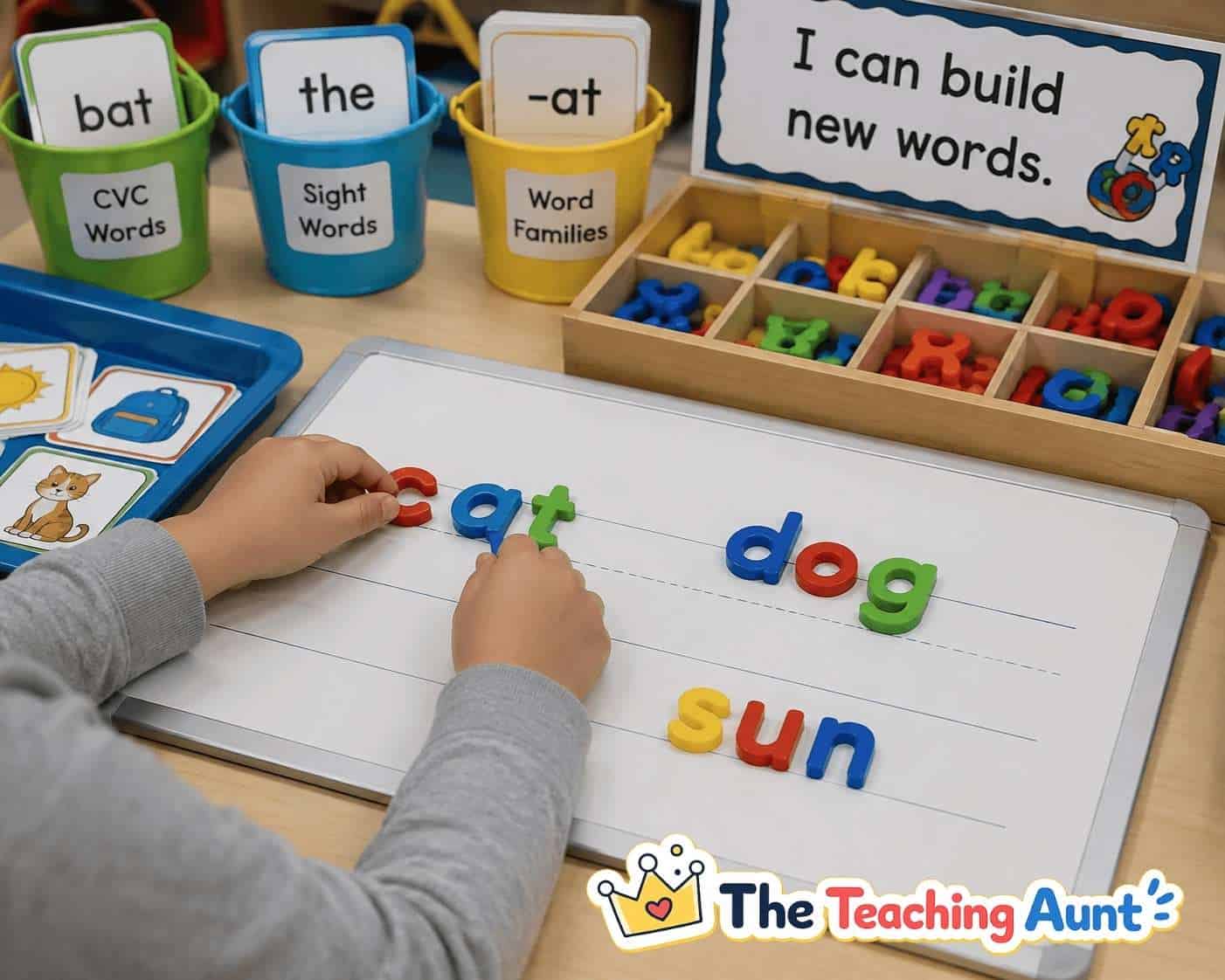
1. Magnetic Letter Magic
If I could only choose one classroom tool for teaching CVC words, it would be magnetic letters.
My students never seemed to get tired of them.
Instead of introducing a completely different word each time, we’d simply change one letter.
cat
↓
bat
↓
hat
↓
mat
Children quickly realized that changing just one sound created an entirely new word.
Without realizing it, they were learning phonics, blending, and word families all at once.
Teacher Nessy’s Tip
Keep magnetic letters available during literacy centers. Many children will naturally build and read new words even during free-choice time.
2. Go Fishing for CVC Words
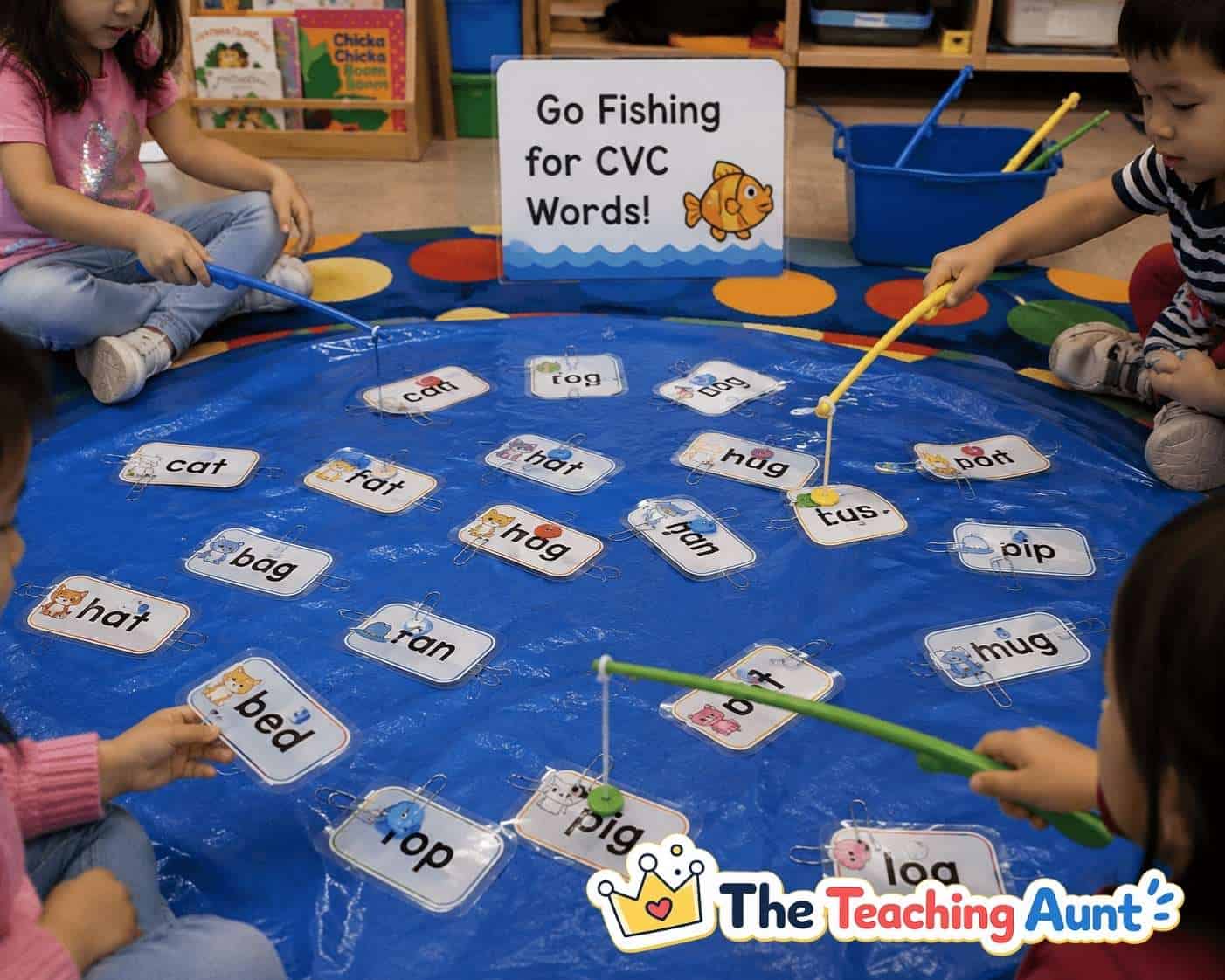
This was always one of the noisiest activities in my classroom…
…and I loved every minute of it.
I attached paper clips to CVC word cards and let children use magnetic fishing rods to “catch” them.
Before keeping the card, they had to read the word aloud.
The excitement of the game made repeated reading feel like play instead of practice.
3. Jason’s Reading Breakthrough
One student I’ll never forget was Jason.
Reading was difficult for him.
While many of his classmates were beginning to blend sounds confidently, Jason often became frustrated.
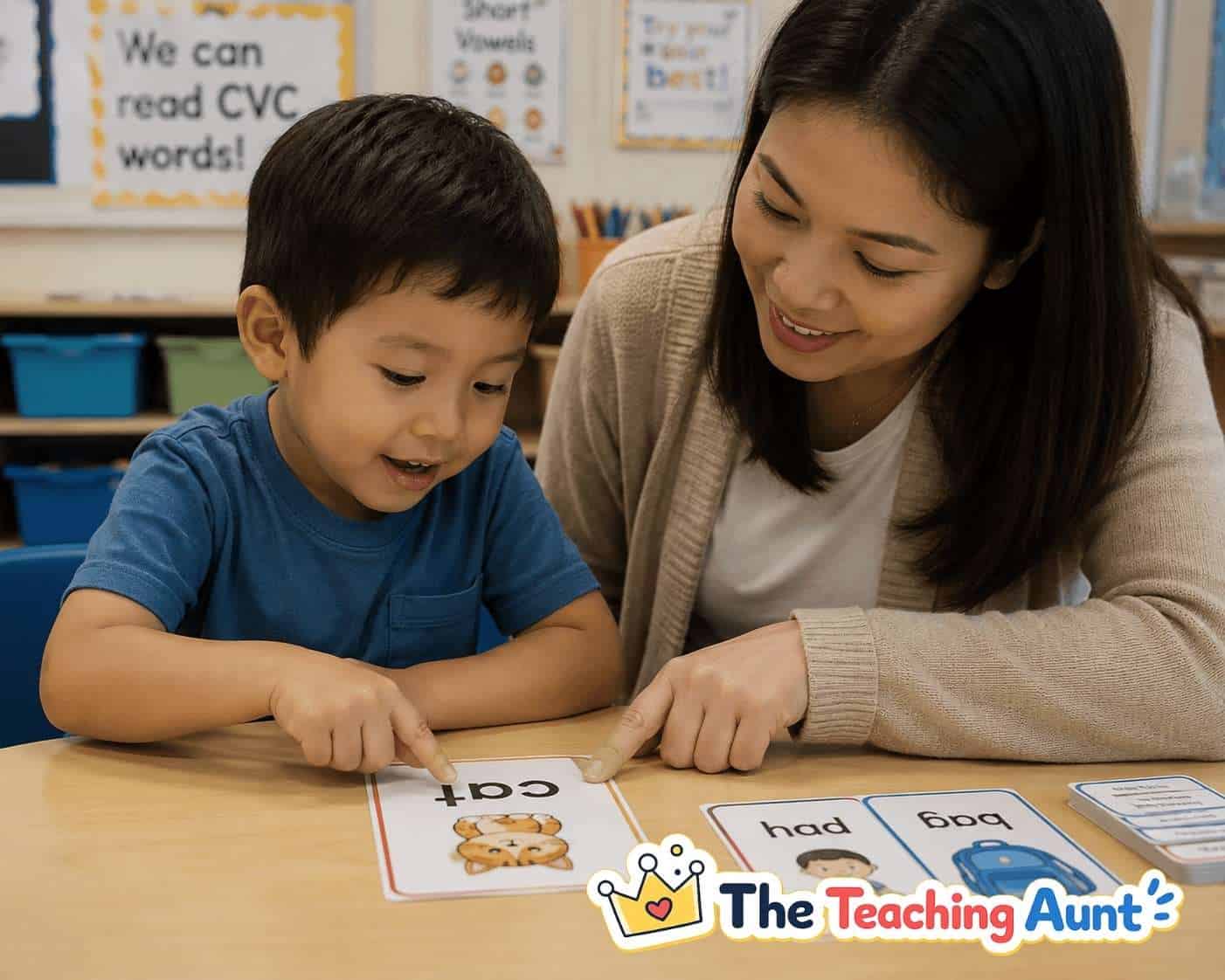
Instead of giving him more worksheets, I invited him to stay after school for just 30 minutes twice a week.
We played matching games.
Read simple CVC words.
Celebrated every small success.
After about two weeks, something changed.
Jason was reading confidently.
His smile that afternoon reminded me of something I’ve seen countless times over the past twenty years.
Children don’t all learn at the same speed.
But with patience, encouragement, and consistent practice, amazing progress can happen.
4. My Favorite 10-Minute Activity
Teachers know that sometimes you only have ten minutes before snack time or dismissal.
My favorite quick activity?
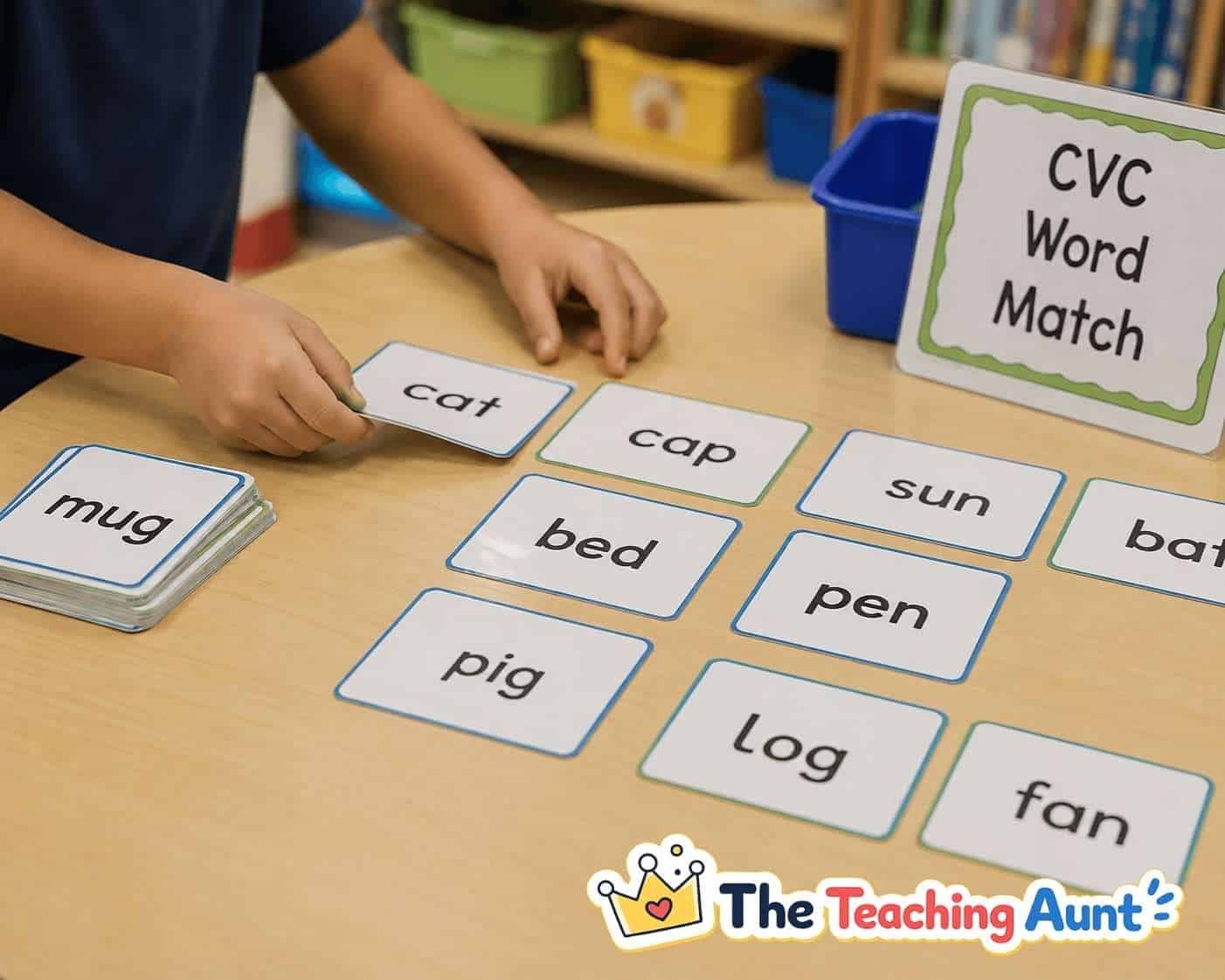
Matching cards.
But there was one important difference.
I removed the picture clues.
Without pictures, children couldn’t guess.
They had to read every word.
It became one of the quickest ways to strengthen decoding skills while keeping the lesson engaging.
Teacher Nessy’s Tip
After children read the word, let them find the matching picture.
This small change encourages decoding instead of guessing.
Five More CVC Activities I Always Recommend
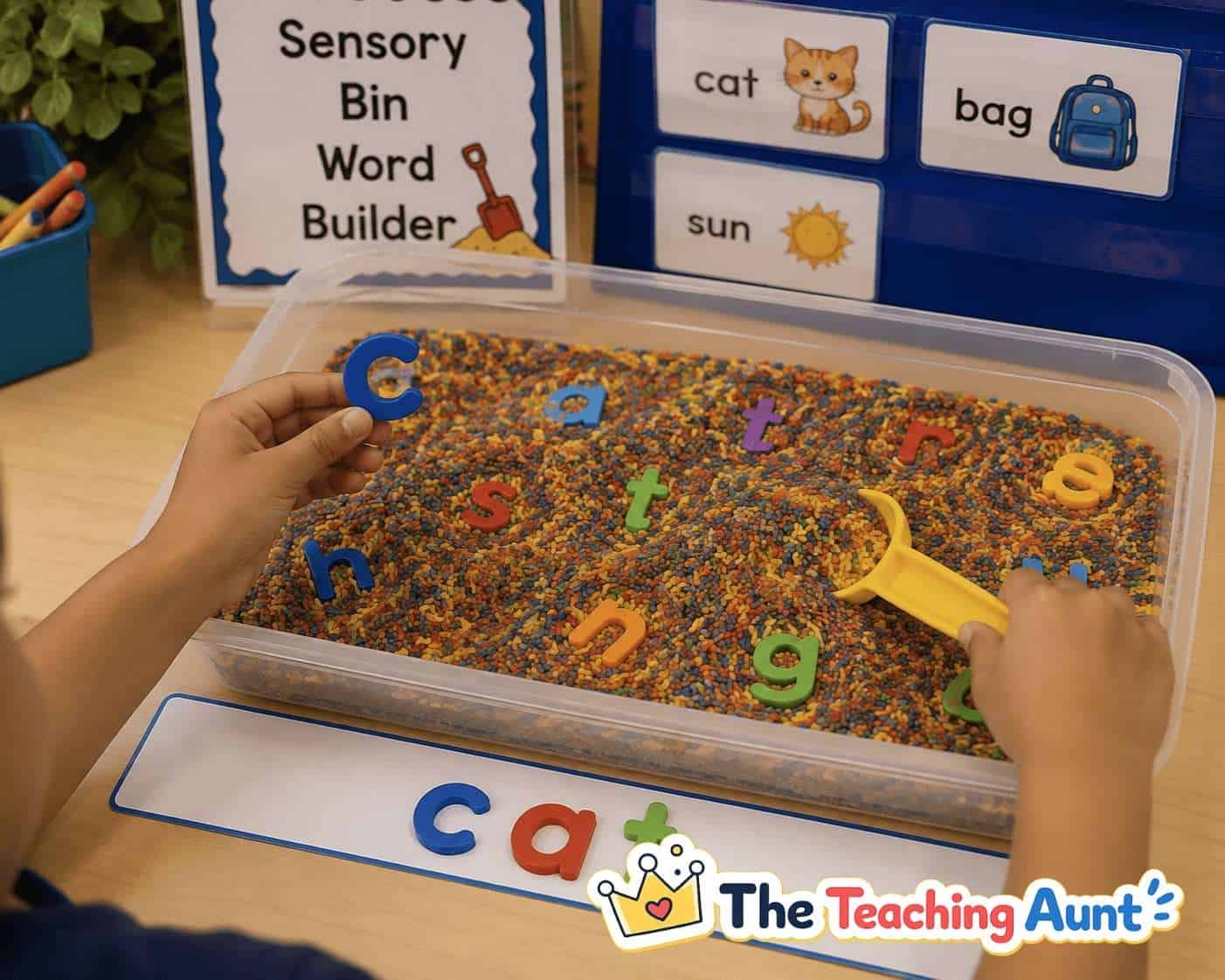
Sensory Bin Word Builder
Hide magnetic letters or word cards inside rice, beans, or colored sand.
Children search for letters, build words, and read them aloud.
Word Family Wall
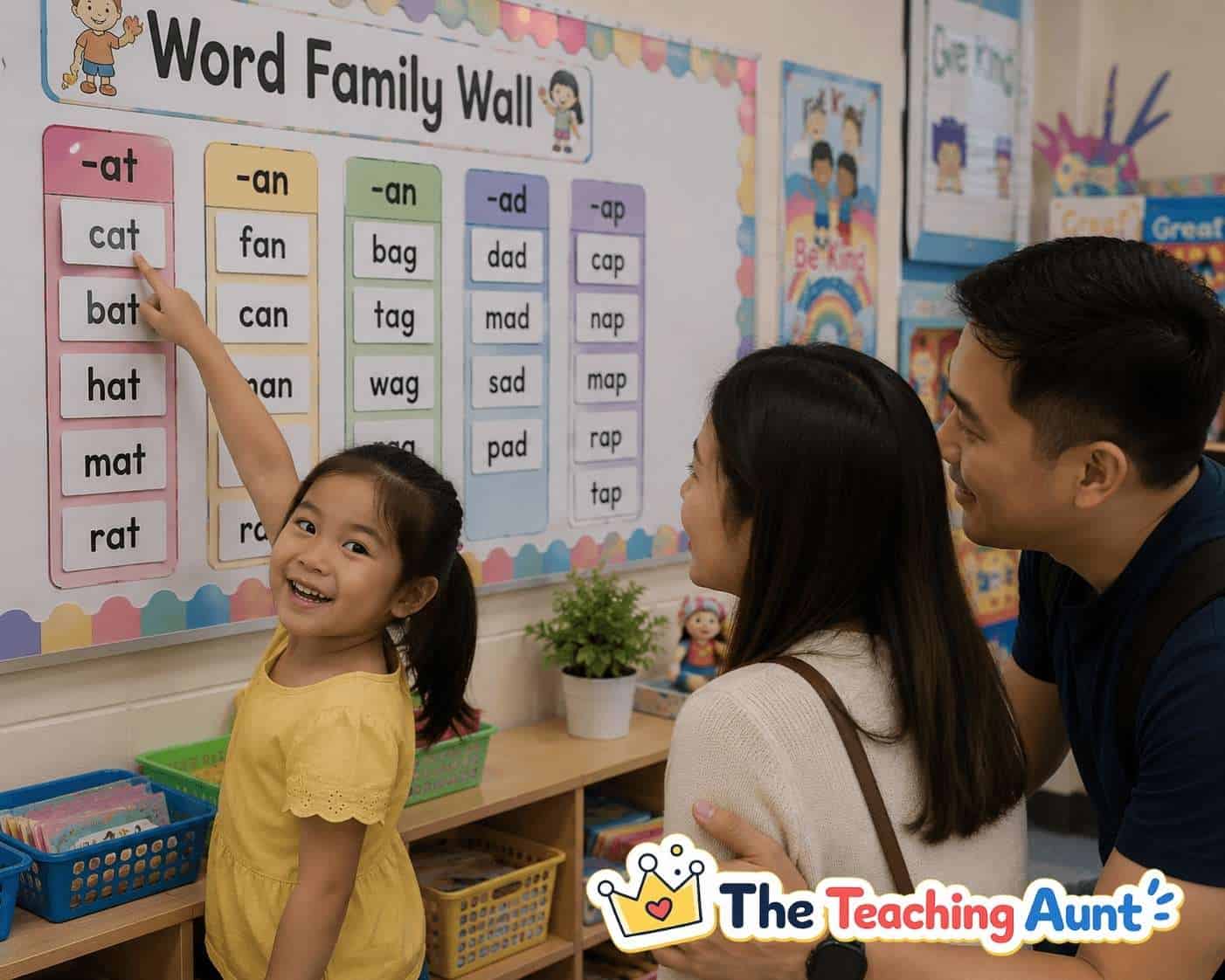
One of my favorite classroom displays was our Word Family Wall.
Each time we learned a new word family, we added it to the wall.
My students loved watching it grow throughout the year.
One of the sweetest moments happened every afternoon when parents came to pick up their children. Many of my students would proudly walk over to the Word Family Wall and say, “Mom! Dad! Look what I can read!” Then they’d point to familiar words and read them aloud right there in the classroom.
Those little celebrations meant just as much to me as they did to the children. They were a reminder that confidence grows one word at a time.
CVC Videos for Reading Practice
Videos are a wonderful way to introduce or review CVC words.
I often used them before a phonics lesson to get children excited or at the end of a lesson to reinforce what we had learned.
Below are my top recommended CVC word quizzes. My students love these YouTube videos because they get to practice their new skill, plus the fact that it’s on YouTube!
More CVC Reading Practice
Want more practice with CVC words and word families? Visit The Teaching Aunt on YouTube for more free phonics videos, reading practice, and CVC word family lessons.
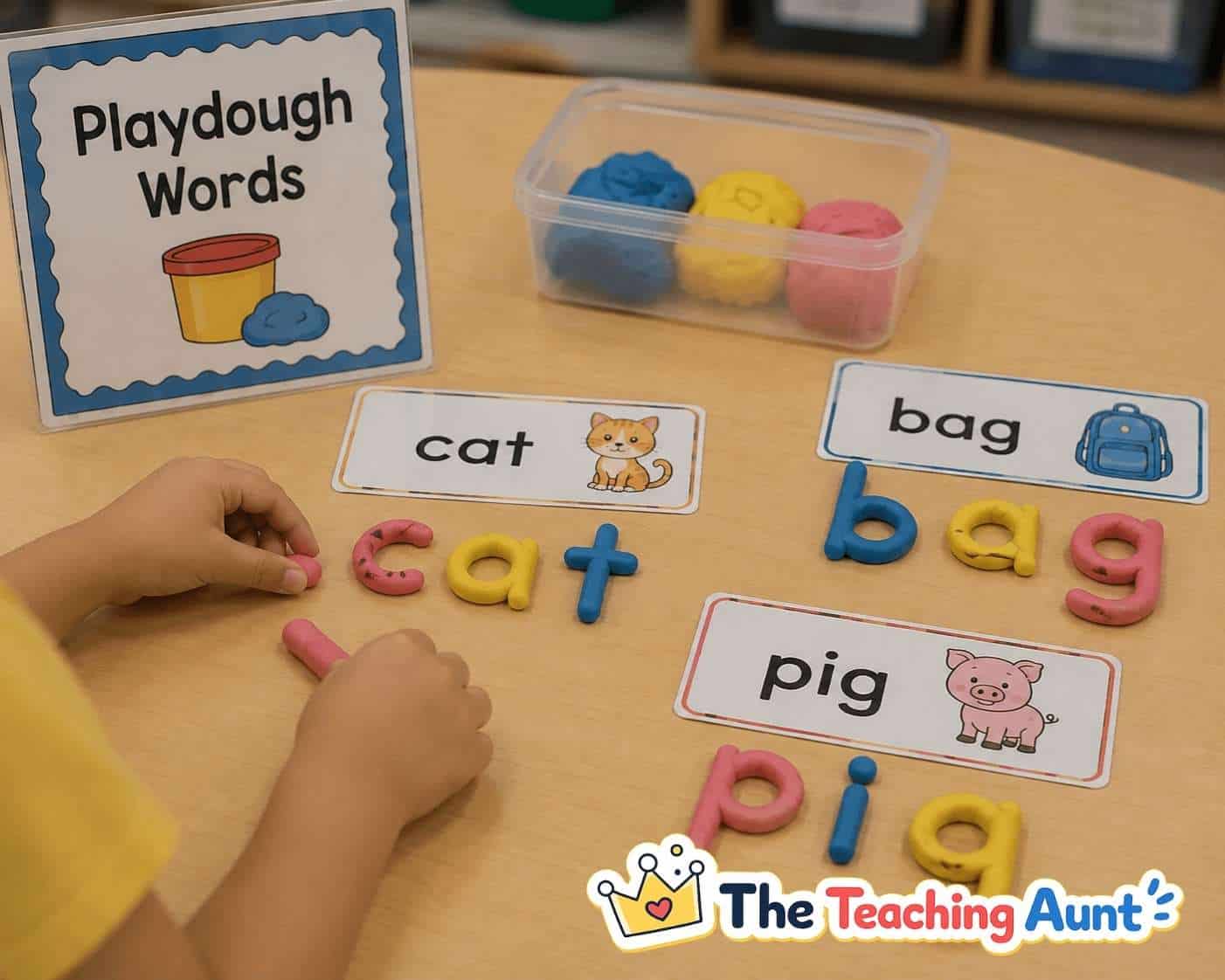
Playdough Words
Roll playdough into letters to build CVC words.
This simple activity combines phonics practice with fine motor development.
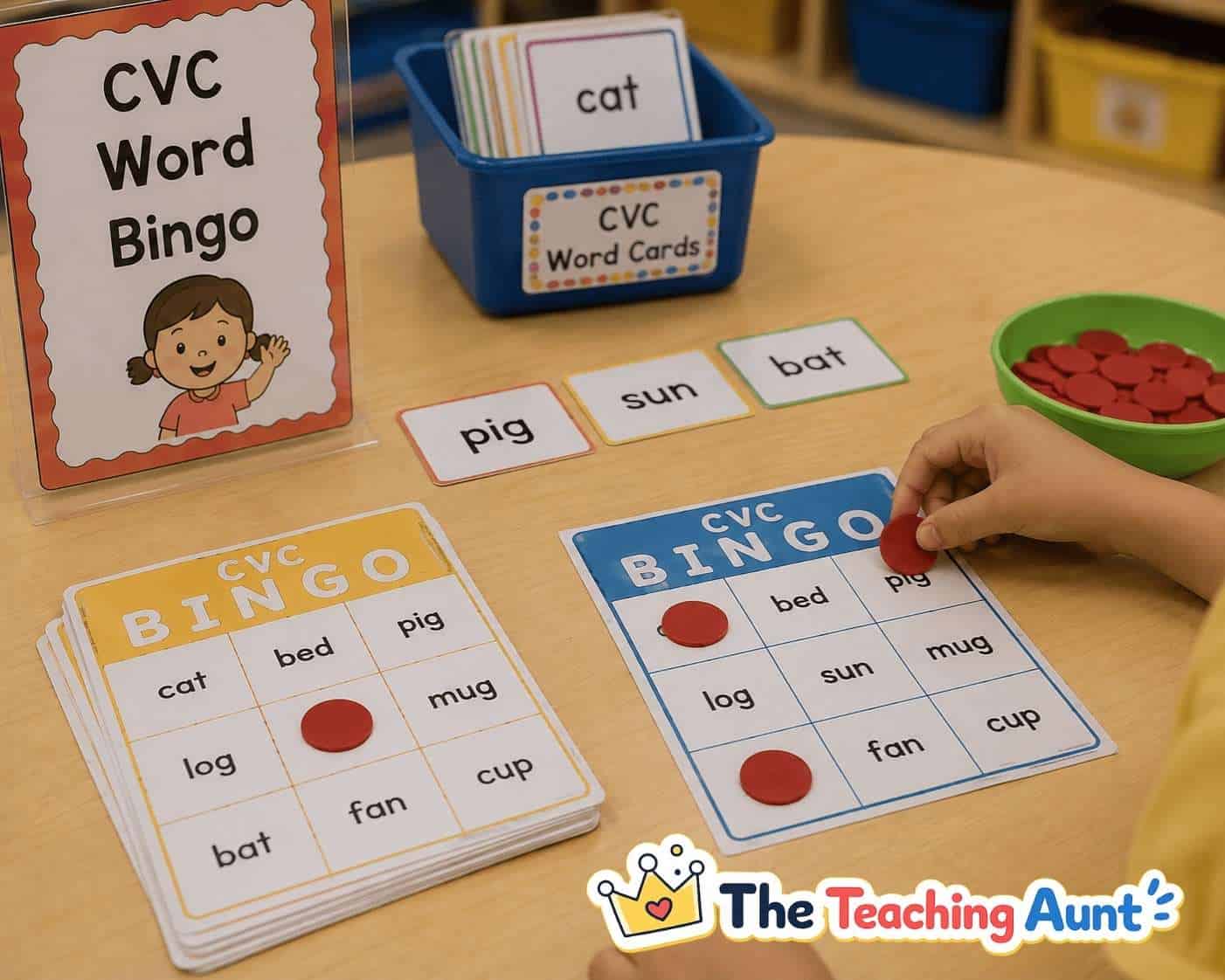
CVC Word Bingo
Instead of calling out letters, call out CVC words.
Children read the words on their bingo boards while listening carefully for the correct answer.
It’s one of those games that children happily ask to play again.
Free Printable CVC Resources
Learning becomes even more meaningful when children have opportunities to practice in different ways.
Here are some of my favorite free printable resources to support beginning readers.
Word Family Worksheets
Build confidence by practicing common word patterns through tracing, matching, puzzles, and writing activities.
Explore Word Family Worksheets
Read and Color CVC Worksheets

Practice reading while reinforcing comprehension through coloring activities.
Spell and Write CVC Worksheets

Strengthen both decoding and spelling with simple writing exercises.
Read, Trace, and Write CVC Worksheets

Perfect for independent practice, homework, or literacy centers.
Search and Color CVC Words Worksheets

Exciting learning that combines reading and games.
Read and Draw CVC Words

A favorite for the creative kids in the classroom.
Free Word Family Wall Cards

Display word families around your classroom or learning space for daily reading practice.
My Advice for Parents
One question I hear often is:
“My child knows the alphabet but still can’t read CVC words. What should I do?”
My answer is always the same.
Make learning fun.
Play games together.
Watch phonics videos.
Practice a little every day instead of trying to do everything at once.
And celebrate every success.
A sticker.
A high five.
A hug.
A simple “I’m proud of you.”
Those little moments build confidence, and confident children are willing to keep trying.
Frequently Asked Questions
What age should children start learning CVC words?
Most children are ready between ages four and six, once they know most letter sounds.
How long should CVC practice last?
Ten to fifteen minutes each day is usually more effective than one long lesson each week.
Should I teach word families first?
Yes. Word families help children recognize patterns, making it easier to decode unfamiliar words.
What comes after CVC words?
After children master CVC words, they can move on to word families, sight words, simple sentences, consonant blends, and longer vowel patterns.
Final Thoughts
After twenty years of teaching preschool and kindergarten, one thing has never changed.
Every child smiles the first time they realize they can read.
Sometimes it happens quickly.
Sometimes it takes a little longer, just like it did for Jason.
But with patience, encouragement, and activities that make learning enjoyable, every small success becomes another step toward confident reading.
Whether you’re teaching a classroom full of children or helping your own child at the kitchen table, remember this:
Reading isn’t a race.
Celebrate every new word.
Laugh during the games.
Enjoy the little victories.
Years from now, children may not remember every worksheet they completed.
But they’ll remember how you made them feel when they discovered they could read.
I hope these free CVC activities help you create those same joyful moments with the young learners in your life.
And remember to visit my Free Printable Page for more!

P.S.
Do you want PREMIUM FREEBIES? Please subscribe to my blog. I promise it will be worth it!
Oh! And please like and follow us on Facebook and Pinterest! <3
Happy learning,